← All Stories

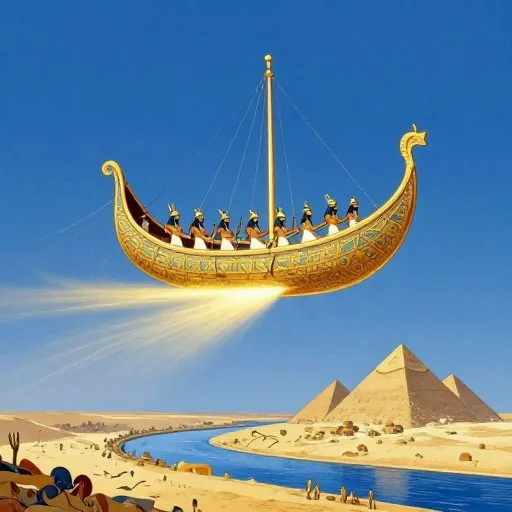
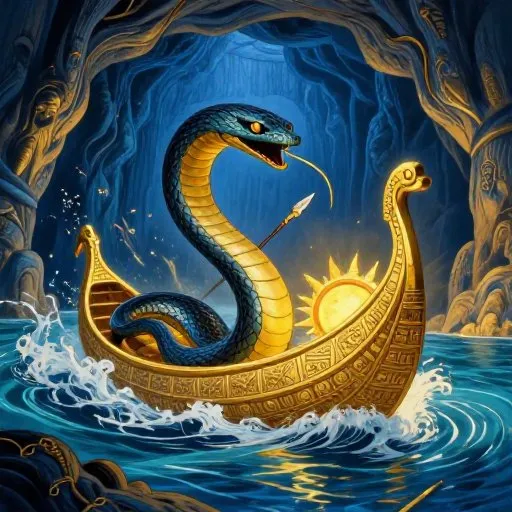
Every night Ra sailed his solar barque through 12 gates of the underworld, fighting the serpent Apophis, to bring the sun back at dawn. Egyptian priests performed rituals all night to help him survive.

The Journey of Ra

Mythwink

The Journey of Ra

Every night, the sun had to fight its way back to morning.

1The Sun Goes Down

Chapter 1: The Sun Goes Down

The sun sets every evening. You know this. You have seen it hundreds of times. It happens, and then it is dark, and then it is light again, and you do not, in the course of a normal day, find this remarkable.

The ancient Egyptians found it astonishing. Terrifying, in fact. And reasonable, because they understood what was actually happening.

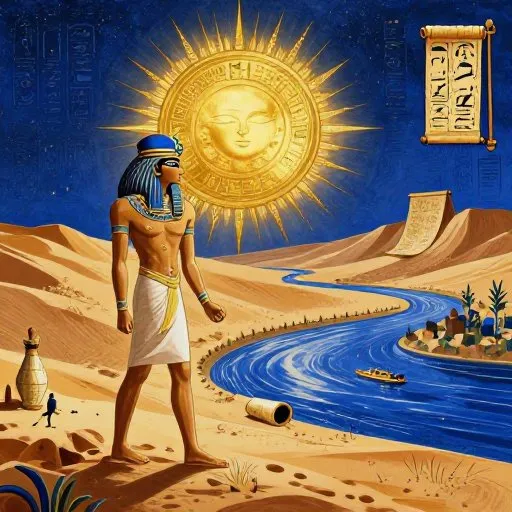
What was actually happening was this: Ra, the sun god, lord of all creation, the force that drove the Egyptian universe, was sailing his boat into the underworld.

Every single night.

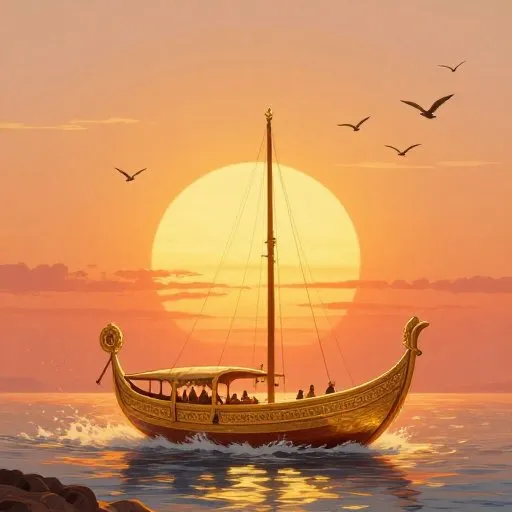
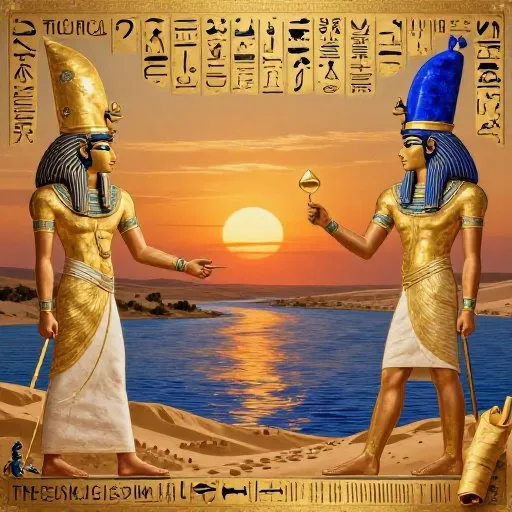
Ra existed in two forms. During the day he was Khepri, the scarab, rising in the morning. At noon he was Ra in full strength. By evening he was Atum, the old man, tired from the day's work. He boarded the Mesektet barque, the boat of evening, and he sailed west into the Duat. The underworld. The dark realm below the earth through which he had to travel all night to reach the eastern horizon again.

There were twelve gates. One for each hour of the night.

Each gate was guarded. Each gate had a name. Each gate required Ra to know the correct spells, the correct words of power, to pass through. If you knew the map, the Egyptians believed, you could survive the journey. This is why they drew the map. This is why the walls of the royal tombs in the Valley of the Kings are covered, top to bottom, side to side, in detailed depictions of exactly what Ra encountered at each gate. The Amduat, the Book of What Is in the Underworld, was a complete navigation guide for the solar journey. The Egyptians were taking no chances.

In the third hour, Ra passed through the realm of Sokar, the hawk-headed god of death, buried under the sand, dormant and dark. In the fifth hour, the barque passed over the cave of Sokar's tomb and had to be carried over land. In the seventh hour, the serpent Apophis was waiting.

It was always waiting in the seventh hour.

2Apophis

Chapter 2: Apophis

Nobody made Apophis. That is important.

Every other major entity in Egyptian religion was created by something. Ra himself emerged from the primordial waters. The gods were formed. The universe was built. Apophis was not created. Apophis existed before creation, in the void that existed before the first god spoke the first word and the first thing came to be. It was the darkness before light. The silence before sound. The nothing that the something of the universe had been carved out of. Apophis was what was left over, and it was not happy about it.

It was a serpent. Enormous. The Egyptian texts describe it as hundreds of feet long. Its roar shook the underworld. It was the sound of chaos itself, which to the Egyptians was the most fundamental evil: the undoing of order, the return of everything to the void.

Every night, in the seventh hour, Apophis tried to swallow the solar barque.

Every night.

Think about that. Every night that you have ever slept through in your entire life, every night that has ever passed while you were asleep and then morning came and you didn't think anything of it, the sun god Ra was in a boat in the underworld fighting a primordial chaos serpent that wanted to eat him and unmake the world. That was happening. According to millions of people, for thousands of years, that was the actual mechanical explanation for why there was a sunrise.

Sometimes Apophis succeeded in swallowing the barque. This was the Egyptian explanation for solar eclipses. The serpent got it, briefly, before Ra's defenders could cut free. This is why an eclipse was not merely alarming to ancient Egyptians. It was evidence. Direct, visible evidence that the thing they feared most was real and that it sometimes won.

Ra had defenders. Several of them.

3The Strange Alliance

Chapter 3: The Strange Alliance

Set sailed with Ra.

This requires a moment of adjustment, because Set is also the villain of the Osiris story. He murdered his brother and scattered the pieces. He is not, in Egyptian theology, a reliably good person. He is the god of storms and the desert and disruption. He is isfet made into a personality.

And every night, he stood at the prow of Ra's barque and fought Apophis.

The Egyptians were comfortable with this kind of complexity. Set's chaos was not the same as Apophis's chaos. Set disrupted the order of the living world. Apophis wanted to end the world entirely. These were different problems. Against the complete annihilation of everything, Set's particular brand of disruption was actually useful. His violence, his wildness, his raw power that made him terrifying in other contexts, was precisely what was needed against a creature the size of the horizon.

Set speared the serpent. The goddess Serqet bound it with chains. The goddess Isis spoke spells. The jackal-headed Wepwawet, the Opener of Ways, cleared the path. Ra did not travel alone. He traveled with a crew, and the crew had a specific composition because each member had a specific function. This was not improvised.

The Egyptians mapped it. In the Book of Gates and the Amduat and the Book of Caverns, all of which were inscribed on the walls of New Kingdom royal tombs, you can see every hour. Every gate. Every guardian. Every danger. The cartographers of the afterlife were thorough. You would not want to navigate this darkness without knowing what was in it, and the Egyptians decided that the dead kings of Egypt should have the map.

The sun travelled through the underworld and picked up passengers on the way. The souls of the dead traveled with Ra for part of the night. In the deep hours, he passed through the realm of Osiris, and for one moment, Ra and Osiris merged. The sun god and the death god becoming, briefly, one entity. Alive and dead at the same time. The combination from which the morning would be possible.

At the twelfth gate, if everything had gone correctly, the serpent was bound and the way was clear.

4The Night Shift

Chapter 4: The Night Shift

The Egyptians did not watch all of this passively.

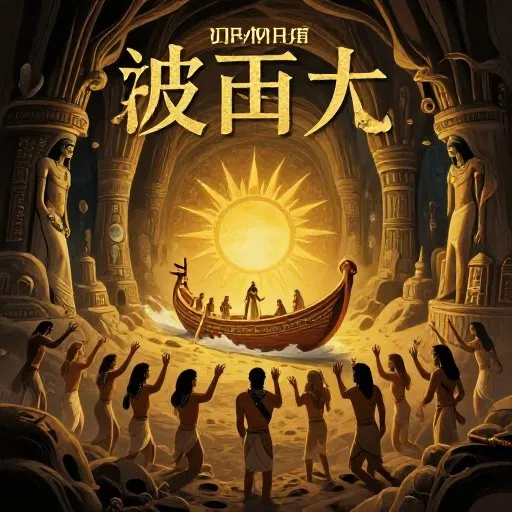
The temples of Egypt, the major ones, the ones at Karnak and Abydos and Heliopolis, had priests who worked through the night specifically to help Ra survive the journey. Rituals. Spells. Recitations of the correct passages from the Amduat. The priests were not spectators. They were participants. They understood their role in the cosmic machinery as active, not passive. Ra needed help. They could provide it. So they did.

This was the night shift of the ancient world. Priests in robes, oil lamps burning, reading the correct words in the correct order while the rest of Egypt slept, doing their part to ensure that the sun would come back. They were not doing this symbolically. They were doing it because they genuinely believed that the words had to be spoken, the rituals had to be performed, and that if they were not performed, the chain of events that led to morning might not complete.

You want to pause on that. These were intelligent, educated, sophisticated people. The priests of Karnak managed vast estates, organized labor, administered grain storage, performed complex mathematical calculations, produced the finest astronomical records in the ancient world. They were not simple people with simple beliefs. They looked at the universe, saw a mechanism, and identified their own role in keeping it running.

They said the words every night. Night after night after night. For centuries.

The pharaoh also had responsibilities. The king of Egypt was not merely a political leader. He was the living Horus, and his daily ritual obligations included waking before dawn, performing the opening of the mouth ceremony, the purification rites, the offerings that aligned the human world with the divine order. He had to do his part too. The temple reliefs show the pharaoh presenting Ma'at, a tiny figure of the goddess of truth, to the gods. Every day. Offering truth to the forces that required truth in order to function.

This is what holding up the world looked like in practice. A man in a temple before dawn, holding a small statue of truth, saying the right words in the right order, because otherwise the sun might not come back. And the sun always came back, which was evidence that the ritual was working. You cannot argue with a sunrise.

5Dawn

Chapter 5: Dawn

At the twelfth hour, Ra sailed out of the eastern horizon as Khepri, the scarab, rising.

The scarab beetle was the symbol of the morning sun specifically because of what scarabs do. They roll balls of dung across the ground. The Egyptians saw a small creature pushing a large ball across the earth and they saw, in that image, the sun rolling across the sky. The image that became one of the most important religious symbols in Egyptian history started with someone watching a beetle push poop uphill and thinking "that's it."

The point is that the sun rising was not a passive phenomenon to the Egyptians. It was an outcome. Something that happened because Ra had fought through the dark, and his crew had fought with him, and the priests had said the words, and the pharaoh had performed the rites, and Apophis had been bound. The sunrise was the proof that the night had been survived. Again.

This repeated. Every single day. Same fight. Same serpent. Same gates. Same crew. Ra aged across the day, sailing west, and by evening he was the old man Atum who had given everything. He boarded the barque and descended again.

And in the temples, when the light faded, the priests took their positions.

The thing about a system you maintain every day without fail is that it accumulates. Every morning that happened was not taken for granted. Every sunrise was, in a small way, a celebration. The Egyptians greeted the dawn with formal hymns. The "Hymn to the Rising Sun" is one of the oldest pieces of religious poetry in the world. It does not describe a routine event. It describes a triumph.

Ra rising was, every morning, the triumph.

He had crossed the darkness. He had fought the serpent. He had gathered his strength in the deep hours where the living and the dead briefly merged, and he had come out the other side.

What the Egyptians understood, and what is not a bad thing to understand, is that light requires the dark to cross. You do not get the sunrise without the twelve gates. You do not get the morning without the serpent being fought. The day is not a given. It is an arrival.

They built temples to help with the arrival. They staffed them at night. They drew the maps in the tombs so that even the dead king knew the route.

That is, in the end, what the daily miracle of the sun looked like to the people who looked at it most carefully. Not something that simply happened. Something that had to be worked for, night after night, with everyone doing their part.
Mythology Notes