Mythwink
The Flight of Quetzalcoatl
The greatest god in Tula fell for the oldest trick there is. What rose from his ashes still crosses the sky.
Aztec Mythology
Mythwink
The greatest god in Tula fell for the oldest trick there is. What rose from his ashes still crosses the sky.
Aztec Mythology
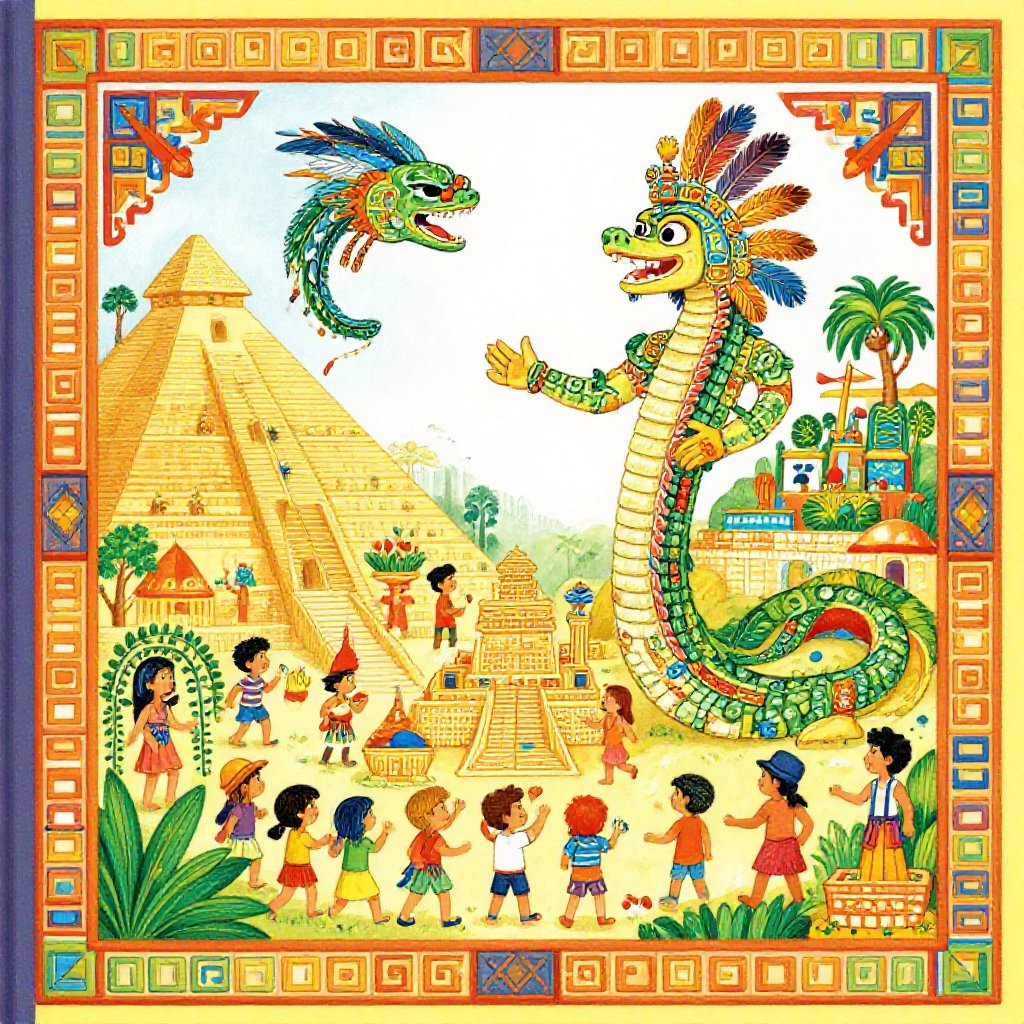
Before the trick, there was a city.
Tula, they called it. Tollan. The place where corn grew in colors that had no names yet. Where cotton came up from the ground already dyed and ready to wear. Where birds filled every courtyard with sound and the people wanted for almost nothing, because their god walked among them and their god was good.
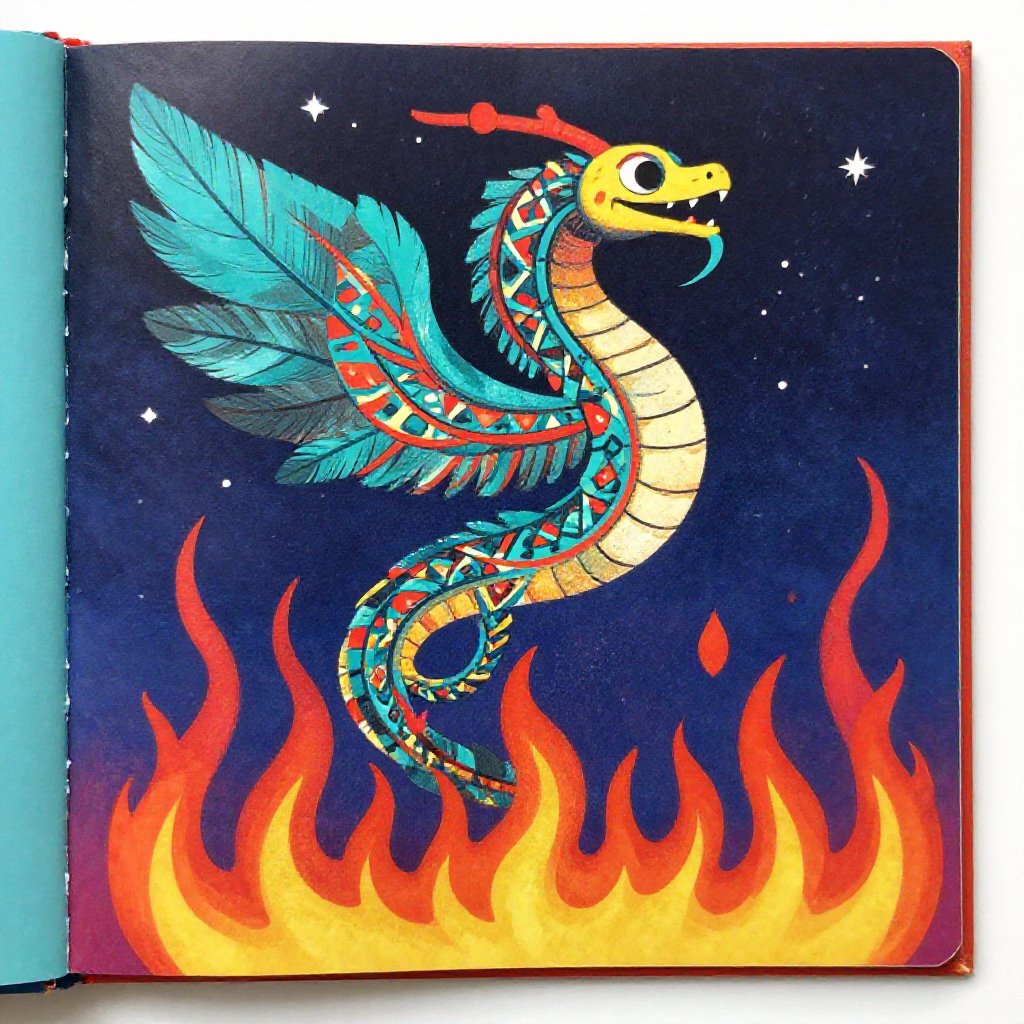
Quetzalcoatl was the feathered serpent. Wind, sky, and the knowledge that separates people from animals: all of it was his. He was the morning star, the light that comes before the sun and announces the day. He did not ask for blood sacrifice. He burned butterflies and jade and sweet incense on his altars. He studied the stars and taught what they meant. He was also very old. And in that old tiredness, there was a crack.
Tezcatlipoca saw the crack. He always sees cracks. That is what he is for.
The smoking mirror, the jaguar of the night sky, the god of sorcery and necessary darkness. He had watched Quetzalcoatl grow comfortable in his goodness, and comfort is how every fall starts.
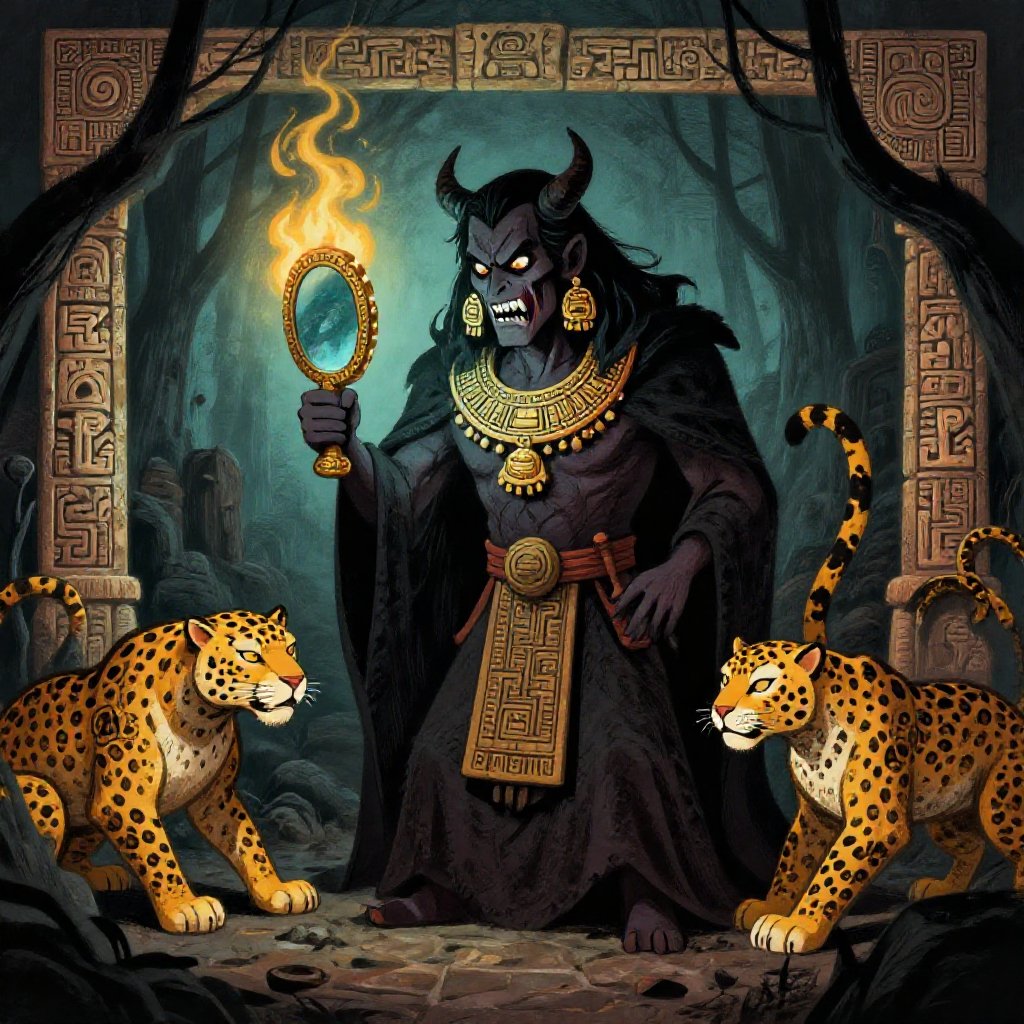
Tezcatlipoca came to Tula disguised as an old man selling something. That is the oldest shape for a trick.
He told the servants at Quetzalcoatl's palace that he had a gift: a mirror. Not an ordinary one. The smoking mirror showed not just a face but the truth behind a face. Quetzalcoatl, whose whole existence was built around truth, sent for it immediately.
What the mirror showed him was his own face. But it was Tezcatlipoca's mirror, and Tezcatlipoca is the god of the other side of things. The face Quetzalcoatl saw was lined and old and mortal-looking. He staggered back. He had not known he looked like that. He had not known time had been working on him that way. The god of wisdom, who understood so much, had never clearly looked at himself.
That was the first wound. The second was about to be poured into a cup.
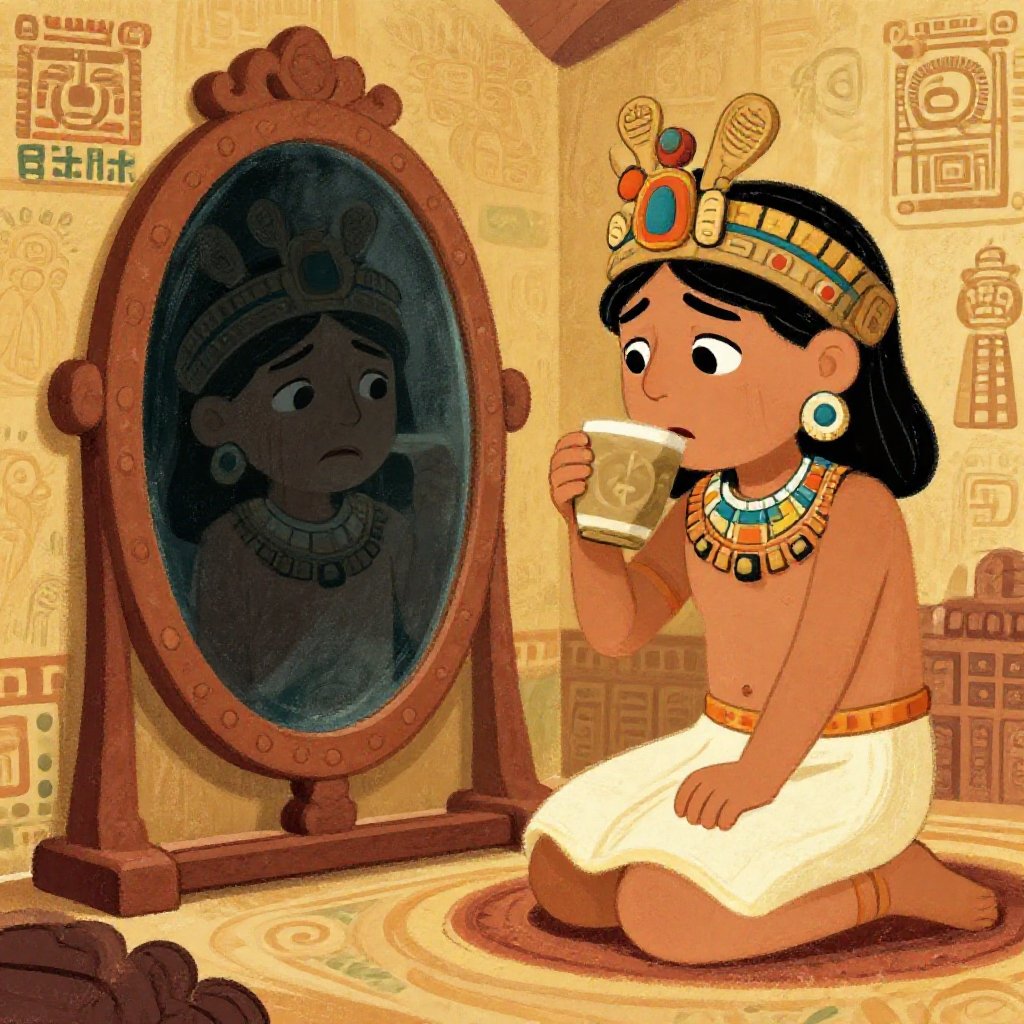
Tezcatlipoca came again, this time as a physician, carrying the agave drink that ordinary people used to forget ordinary troubles. He told Quetzalcoatl it was medicine.
Quetzalcoatl had been fasting and doing penance for days since the mirror. He was tired and depleted and not thinking the way he usually thought. He drank one cup.
One cup tasted like forgetting. He drank more. The accounts of exactly how much vary, but they agree on what happened next: he called for his sister Quetzalpetlatl, who had also taken vows of celibacy and quiet, and she drank too. The night passed in ways that neither of them would have chosen in the morning. Tezcatlipoca was not even present. He did not need to be. The trap had already closed.
Morning came the way mornings do after a night that was wrong: slowly, and with full information. Quetzalcoatl sat in the ruins of every promise he had made to himself and understood the terrible truth. Tezcatlipoca had not made him do anything. He had done it. The sorrow that settled on him was cold and patient and very heavy.
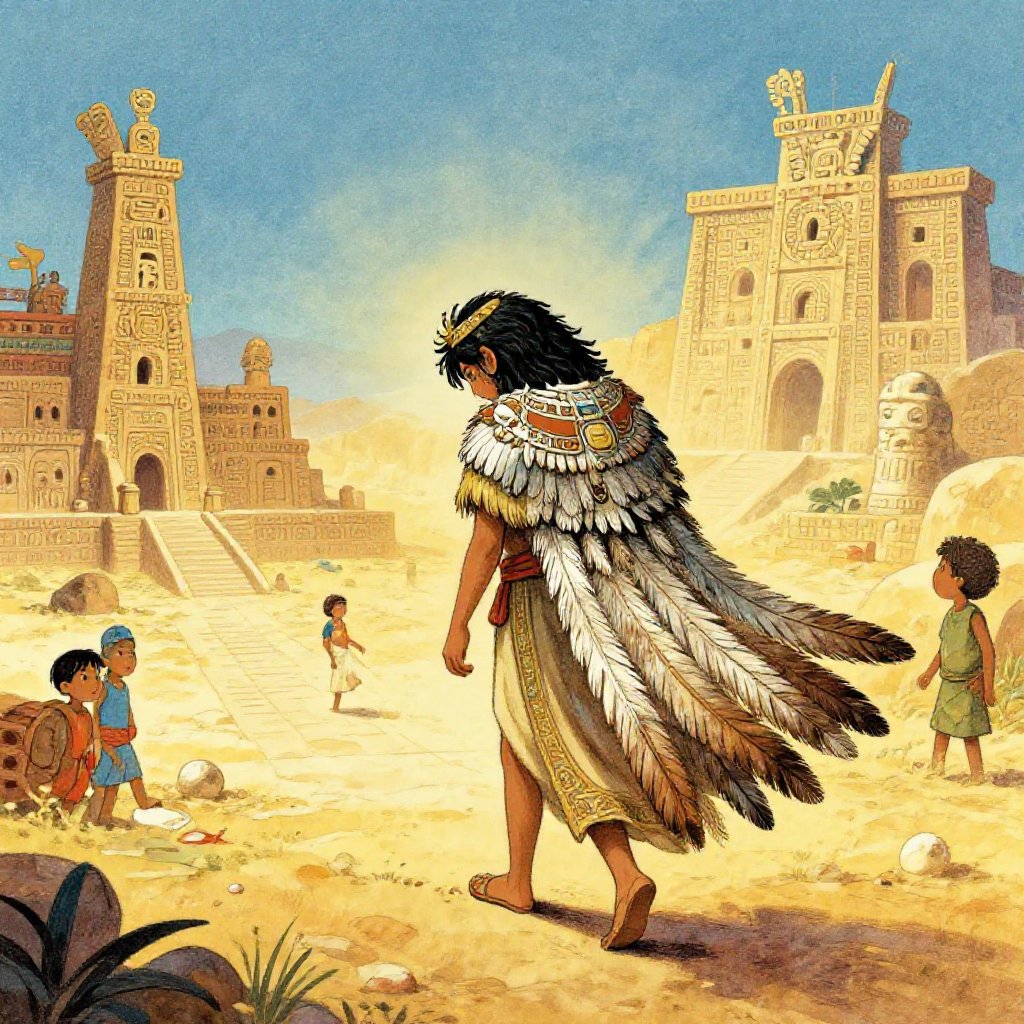
He could not stay in Tula.
Not because he was forced to leave. Because he could not be what Tula needed from inside the wreckage of what he had done. He put on his feathered vestments and his turquoise mask and walked east, toward the sea. The people of Tula came out to watch him go. Some of them followed. Some of them wept. Some of them stood in the kind of silence that means the same thing as weeping.
The journey east took years. Along the way, he buried things: skills he had given to people, knowledge of making and growing. He buried them so Tezcatlipoca could not have them, but also because he was leaving and you cannot take everything with you.
When he reached the eastern sea, he had been walking long enough that the city behind him was more memory than place.
He built his own pyre. He stood in it. The accounts are clear on this: Quetzalcoatl did not fall or stumble or get pushed. He stepped into the fire himself, the way a person steps into cold water, with the full intention of doing it. The fire took him. From the coals, when the smoke had gone entirely black, birds rose. Birds of every color and feather. And in the east, just before the sun arrived, a star appeared.
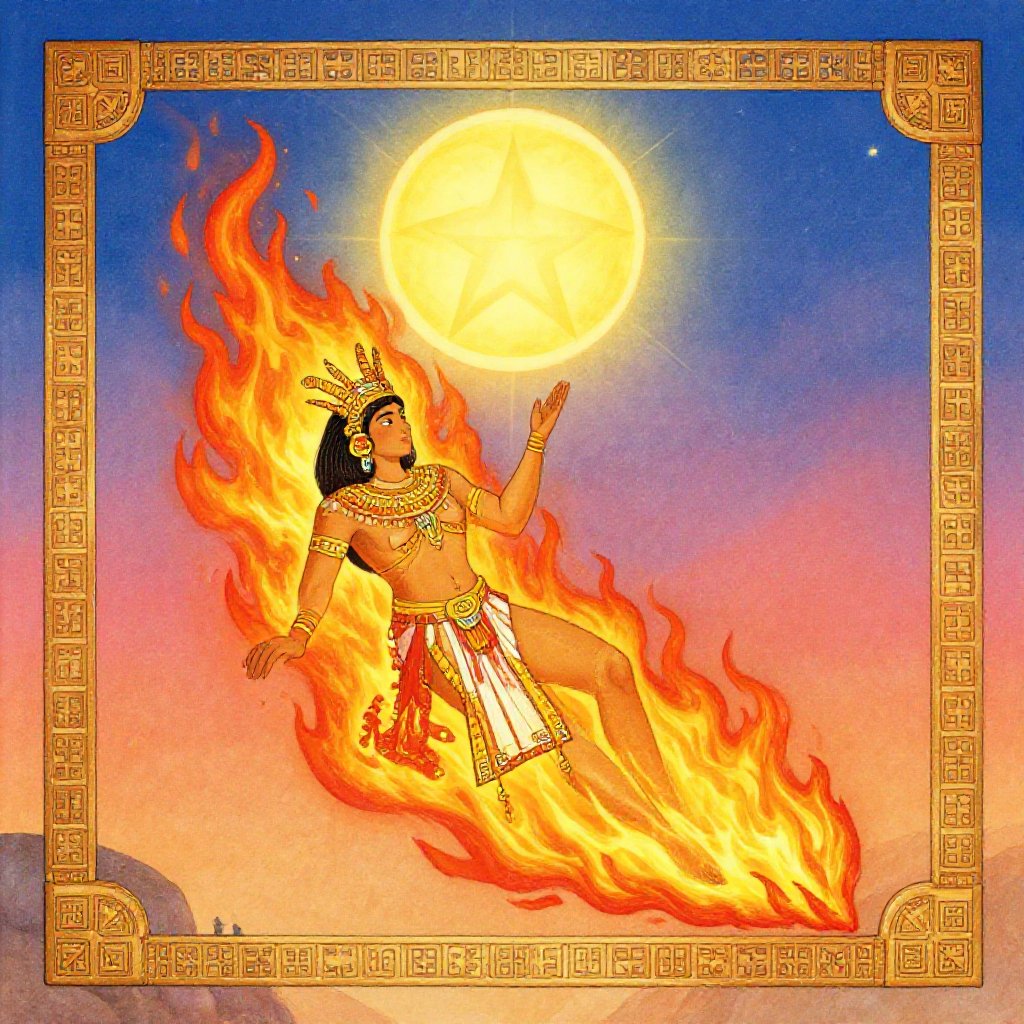
Venus does not move the way the other stars move.
It appears before dawn and disappears when the sun arrives. It appears after sunset and vanishes when night deepens. The Aztec astronomers tracked its movements with the kind of careful, patient attention that people give to something they believe is a god. They were not wrong.
Quetzalcoatl became the morning star. He had been the light of wisdom in Tula, the thing that came before understanding and announced it. So he became the light that comes before the sun. The pattern Venus traces through the sky, disappearing into darkness and rising again, over and over: that was his journey. He walked into the fire and came out as light.
A prophecy grew from his name. Quetzalcoatl would return from the east, from the sea, in a year called One Reed on the Aztec calendar. In 1519 by the European count, One Reed arrived. Hernan Cortes sailed in from the east, from the sea, exactly as the prophecy described. Whether Moctezuma truly believed Cortes was Quetzalcoatl is a question historians still argue about. But the story had been waiting for something to fill it. The world has a way of providing arrivals for prophecies, even when the arrivals are nothing like what was meant.