MYTHWINK
The Churning of the Ocean
The gods needed a miracle. Their plan was to stir the sea with a mountain. Naturally.
Hindu Mythology
MYTHWINK
The gods needed a miracle. Their plan was to stir the sea with a mountain. Naturally.
Hindu Mythology
The gods were losing.
Not a little bit. Not in one battle, in one bad afternoon. They were losing everything, slowly, the way a fire loses when someone forgets to feed it. A curse had touched the king of the gods, Indra, and crept from him into every divine being in the heavens. Their arms grew weak. Their eyes went dim. The demons sensed it immediately, the way dogs sense fear, and came up laughing from the deep places.
Battle after battle, the gods fell back. This was not the natural order of things. The natural order had the gods winning and the demons being annoyed about it. Now the demons were winning and the gods were very, very sorry.
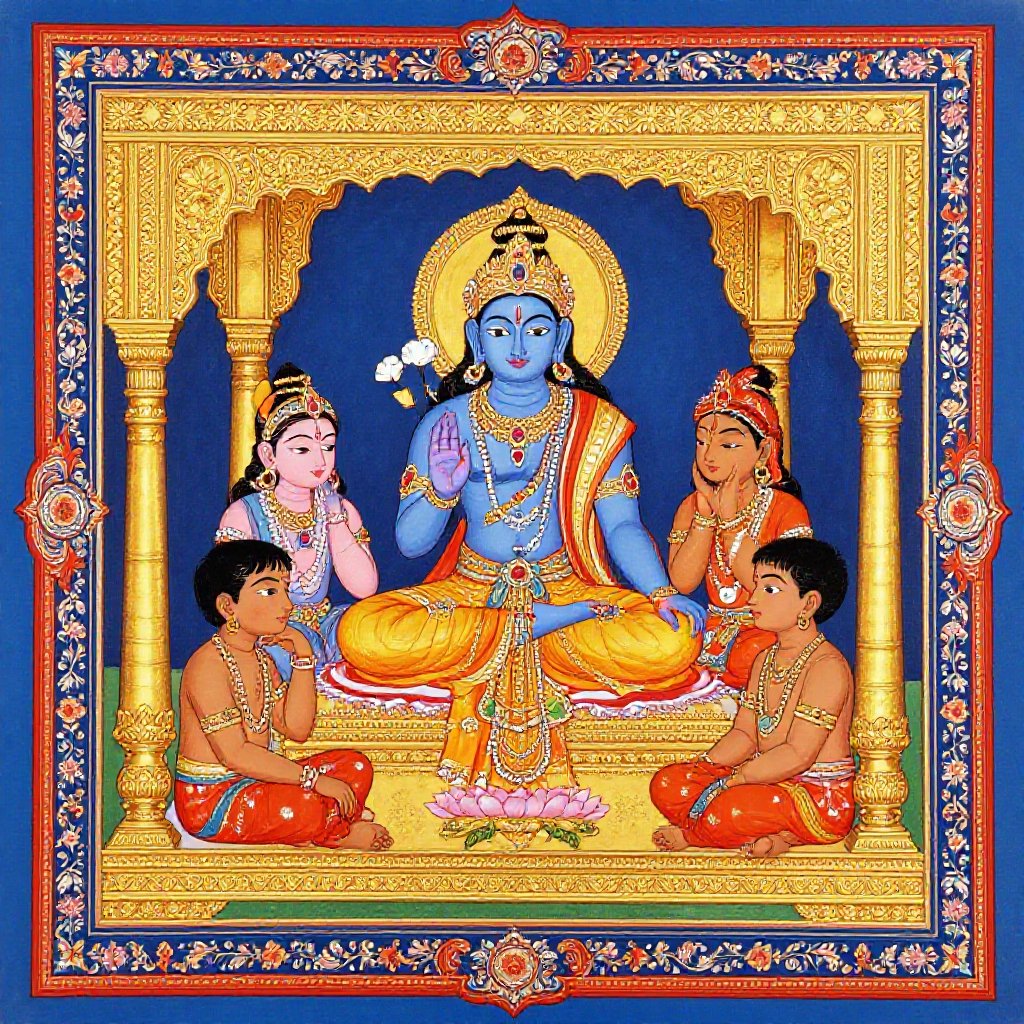
Vishnu heard their prayers. He always does. He came to them in a vision, enormous and calm, and he did not say "there, there." He said: there is a way. At the bottom of the Kshira Sagara, the great sea of milk, lay the amrita. The nectar of immortality. Drink it, and no curse could hold. But getting it out required a plan, and the plan required a mountain, and the mountain required help from the very last people the gods wanted to ask.
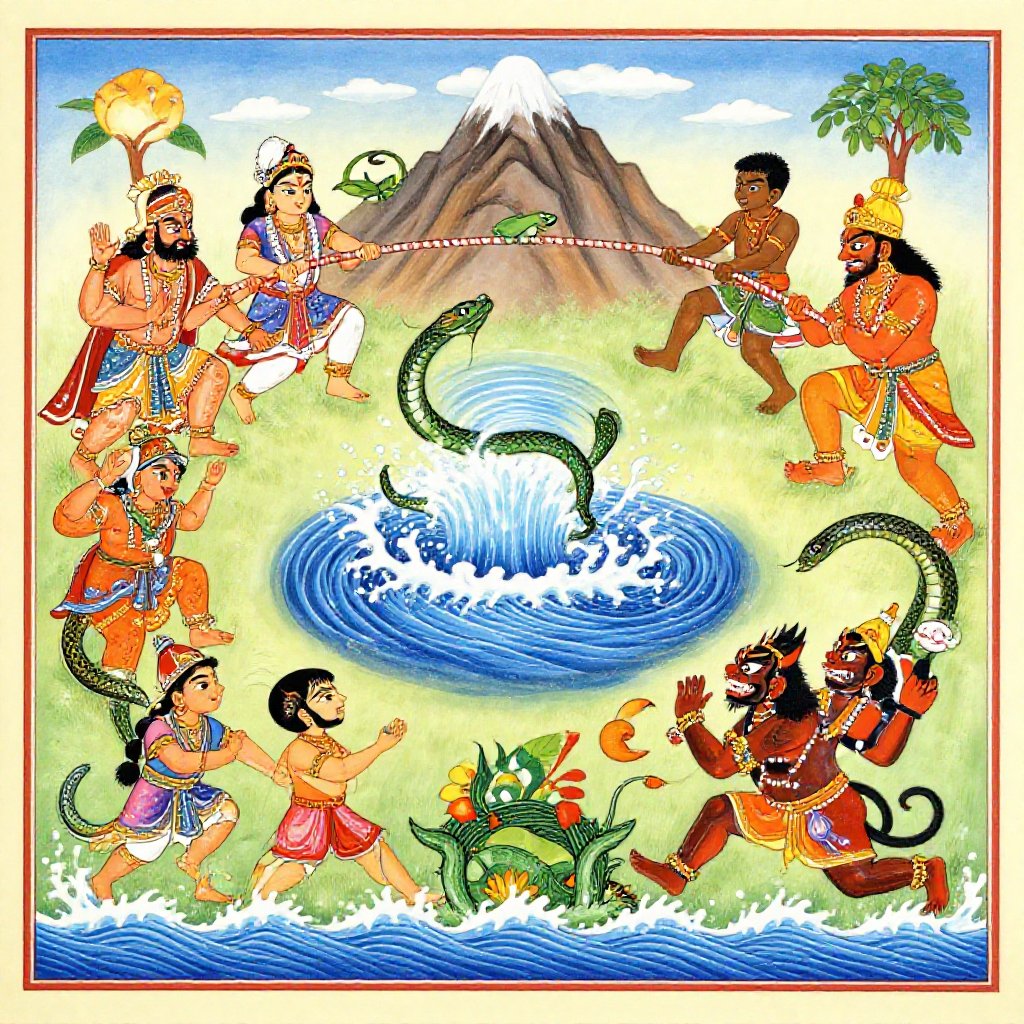
The mountain was called Mandara. It was not a small mountain. It was thirty-two thousand miles high and eleven thousand miles deep, and the gods needed it as a churning rod. They tried to pull it up themselves first. The mountain did not move. Not even a little.
So they went to the demons.
The bargain was simple on the surface: the demons would help churn the ocean, and everyone would share the amrita at the end. The gods knew the demons would try to steal it. The demons knew the gods would try to steal it. Everyone agreed anyway, because that is how necessity works.
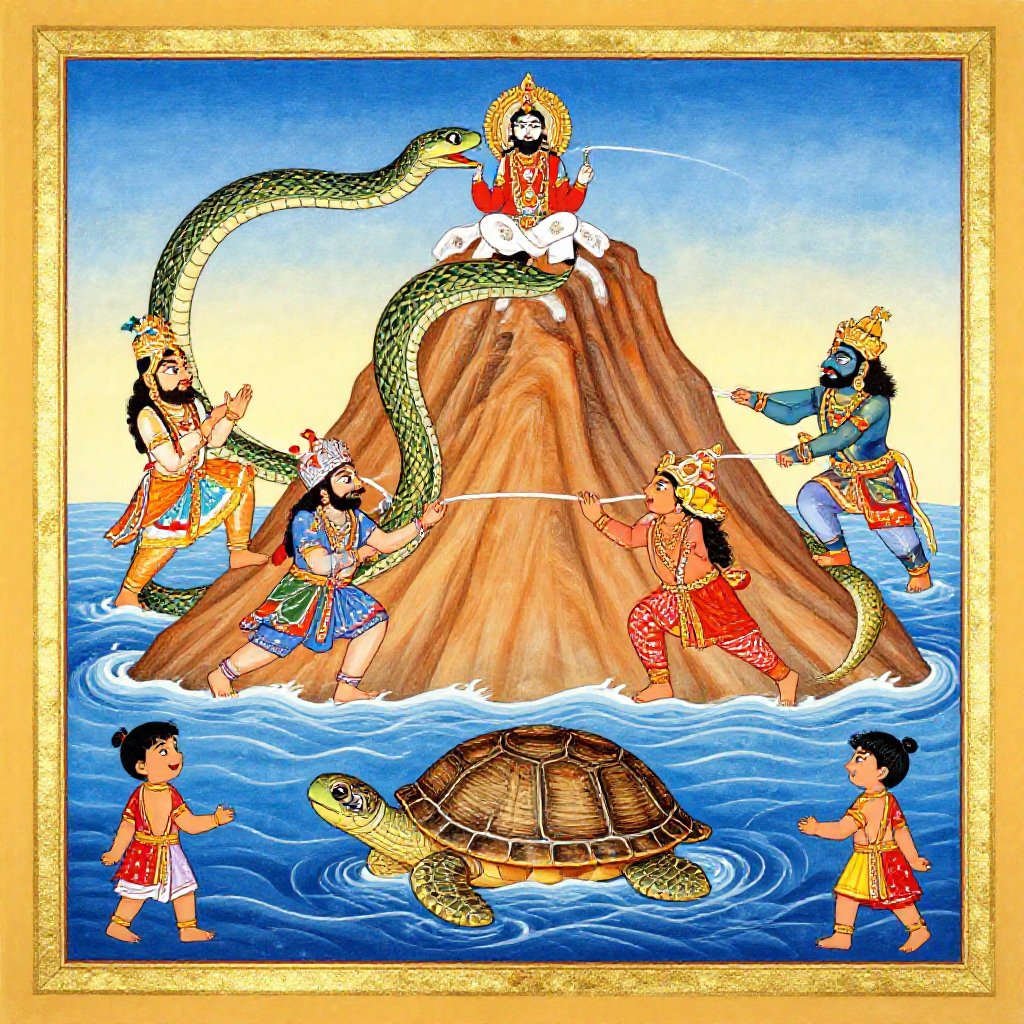
Together, gods and demons wrapped the great serpent Vasuki around Mandara like a rope around a spindle. Vasuki had a thousand hoods and was not pleased about being used as rope. His breath came out as poison smoke. The demons, proud and impatient, grabbed his head. The gods took his tail.
That was Vishnu's quiet suggestion, and the demons had not thought to ask why. When the churning started and Vasuki breathed his worst directly into their faces, they found out.
The first problem with using a mountain to stir an ocean is that mountains are very heavy.
Mandara sank straight down through the sea, dragging gods and demons with it. The serpent thrashed. The whole project was about to end before it produced anything useful. Then something rose from below.
Something old. Something patient. Something with a very large shell.
Vishnu himself, in the form of Kurma the great turtle, came up from the deep and placed Mandara on his back. The mountain steadied. The churning could begin. The gods chose not to comment on the fact that their divine preserver had turned himself into a reptile and was now sitting at the bottom of the sea holding up a mountain. Some things you simply accept.
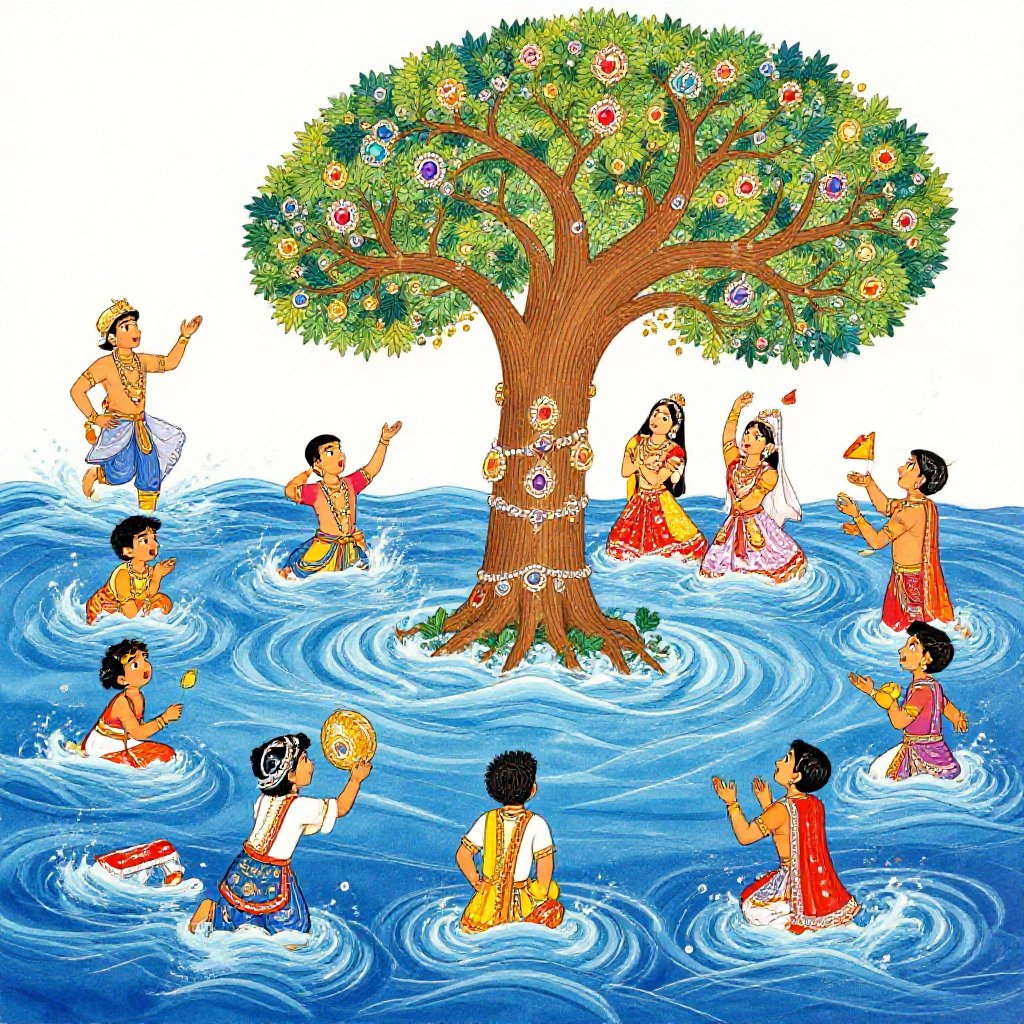
Pull and release. Pull and release. Strange things began to float up from the depths. A wish-granting cow. A divine doctor carrying a pot. Celestial dancers, rising from the foam, looking very cheerful about it. And then something else. Something that was none of those things. A black column rose from the water, thick and shimmering, and everything it touched began to wither. Even the gods took a step back.
This was Halahala. The poison that could end all worlds. Nobody had mentioned it would be in there.
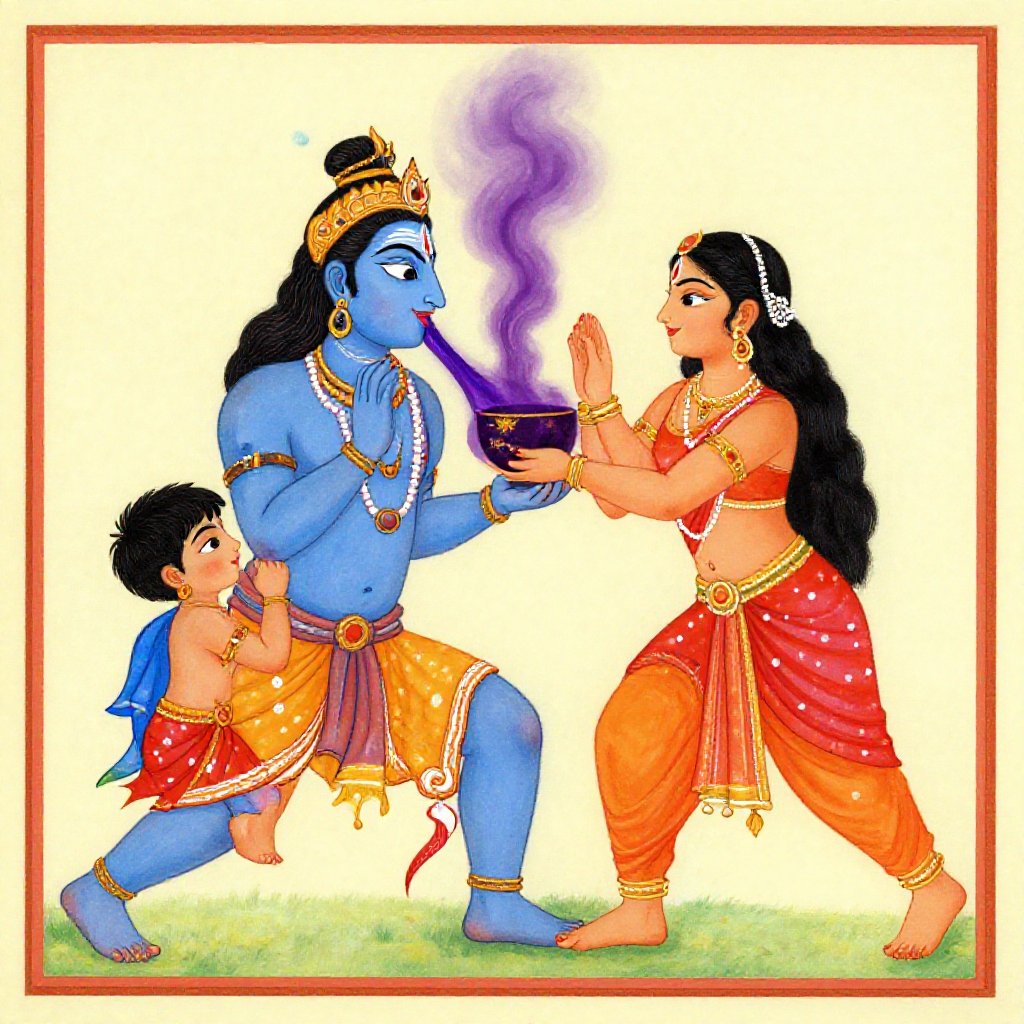
The Halahala spread across the water and the air above it turned wrong. Gods who had never been sick were feeling very sick. The plan was falling apart.
Then Shiva came.
He had been watching from his mountain, waiting for the moment when everyone else had run out of ideas. That is often when Shiva arrives. He walked down to the shore, looked at the spreading black poison, and picked it up. Then he drank it. The whole of it. The way you drink a glass of water when you are thirsty. His wife Parvati was standing beside him, and she grabbed his throat with both hands before it could go down, which was very fast thinking on her part. The poison stopped in his neck. It turned his throat blue.
It is still blue today.
Shiva walked back up the mountain. He did not ask for a celebration. He is not that kind of god. The gods and demons stood on the shore, the immediate crisis behind them, and looked at the rope and the mountain and the very long job still ahead. The greed was fully restored. Back to work.
This is why Shiva is called Neelakantha: "blue-throated one." Parvati saved all of creation by grabbing her husband by the neck. A very underrated marriage.
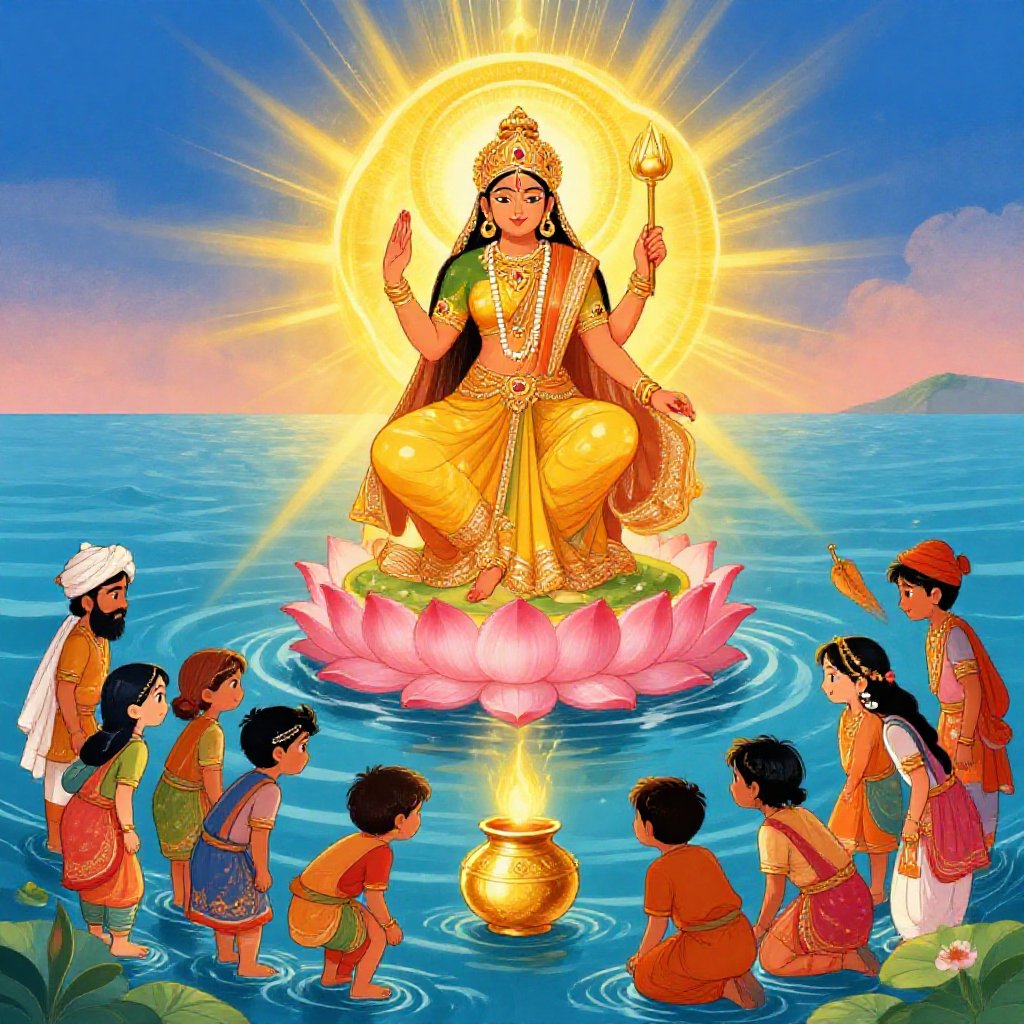
At last, Dhanvantari rose from the foam one more time, holding a white pot above his head. Inside the pot: the amrita. The nectar of immortality, finally drawn up from the deep, glowing softly in an ordinary clay jar.
The demons grabbed it and ran.
The agreement lasted exactly until the prize was real, which is about as long as most agreements between gods and demons last. They snatched the pot and sprinted. Vishnu had expected this. He became a woman.
Her name was Mohini, and she was the most beautiful being the demons had ever seen. Beauty, in that particular moment, was worth more than any army. While the demons argued loudly over who should drink first, Mohini smiled and offered to hand out the amrita herself. The demons, delighted, formed a line. She walked down the line of gods and poured every last drop into their mouths. By the time the demons understood what had happened, the pot was empty.
Almost. One demon named Svarbhanu had been clever. He disguised himself as a god and slipped into the divine line, and got one mouthful down before Vishnu's spinning disc took his head clean off. But he had already swallowed. He could not die. His head became Rahu. His body became Ketu. They are in the sky right now, chasing the sun and moon, swallowing them whole when they catch up.
That is what makes the world go dark.