Mythwink
Nine Hundred Years of Song
A witch turned them into swans. She forgot to take their voices. That was her mistake.
Celtic Mythology
Mythwink
A witch turned them into swans. She forgot to take their voices. That was her mistake.
Celtic Mythology
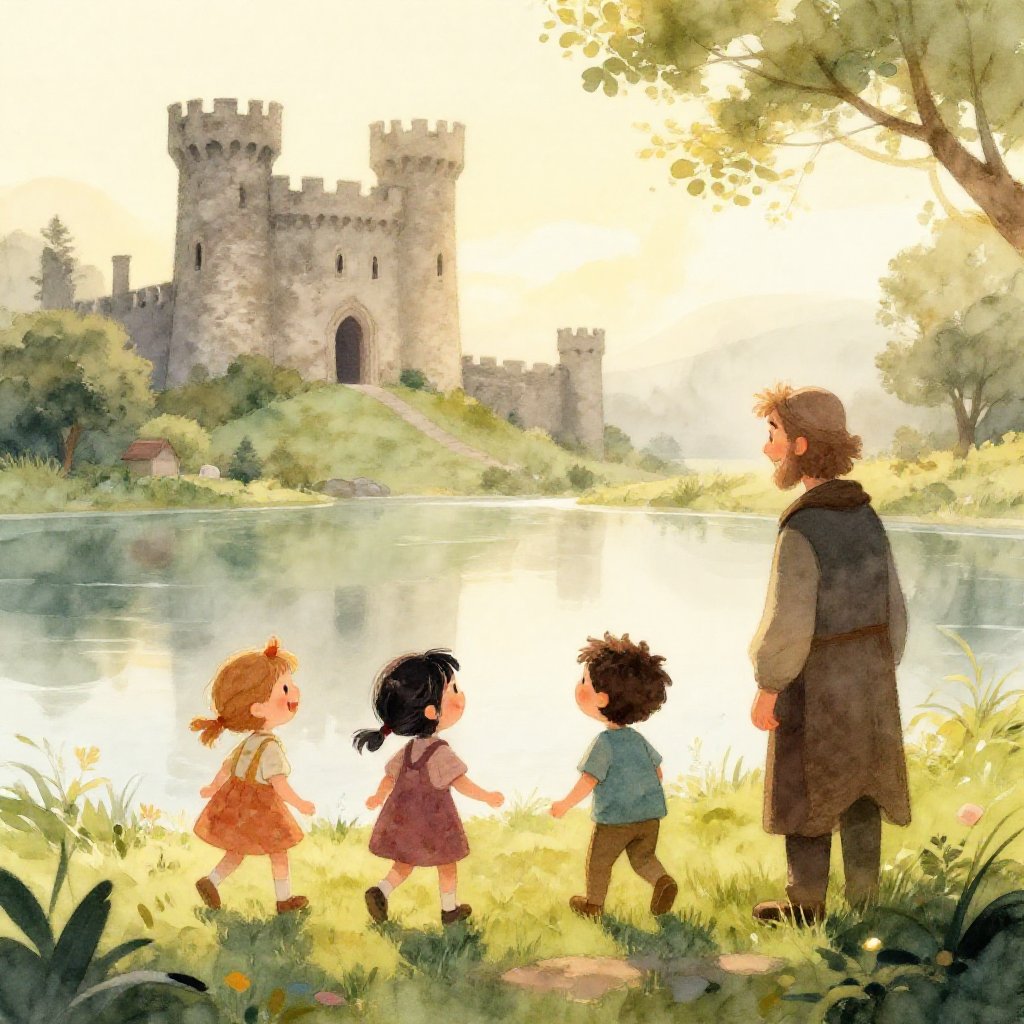
Lir was one of the old gods of Ireland. He was not the greatest of them, but he was not small: he was lord of the sea's edge, where the water and land argue about which one belongs there. He had power, and a home, and four children, and for a while that was enough.
The children's names were Fionnuala, Aodh, Fiachra, and Conn. Fionnuala was the oldest, a girl who had her father's stubbornness and her mother's patience. Aodh was quick and bright. The twins, Fiachra and Conn, were young enough to still be becoming whatever they were going to be. Their mother had died. Lir had loved her in the total way that makes love impossible to replace, so it was years before he remarried. When he did, he chose a woman named Aoife.
He chose wrong. Not because Aoife was wicked at the start. The old stories are careful about this. She loved Lir in the beginning. She was not a villain from the first day. But the children were everywhere, always, and the portion of Lir that belonged to them was a portion she could see getting smaller for herself, day by day. Jealousy works slowly. It starts as a feeling you recognize and wish you did not have. It ends somewhere you could not have found from the beginning without the path it carved for you.
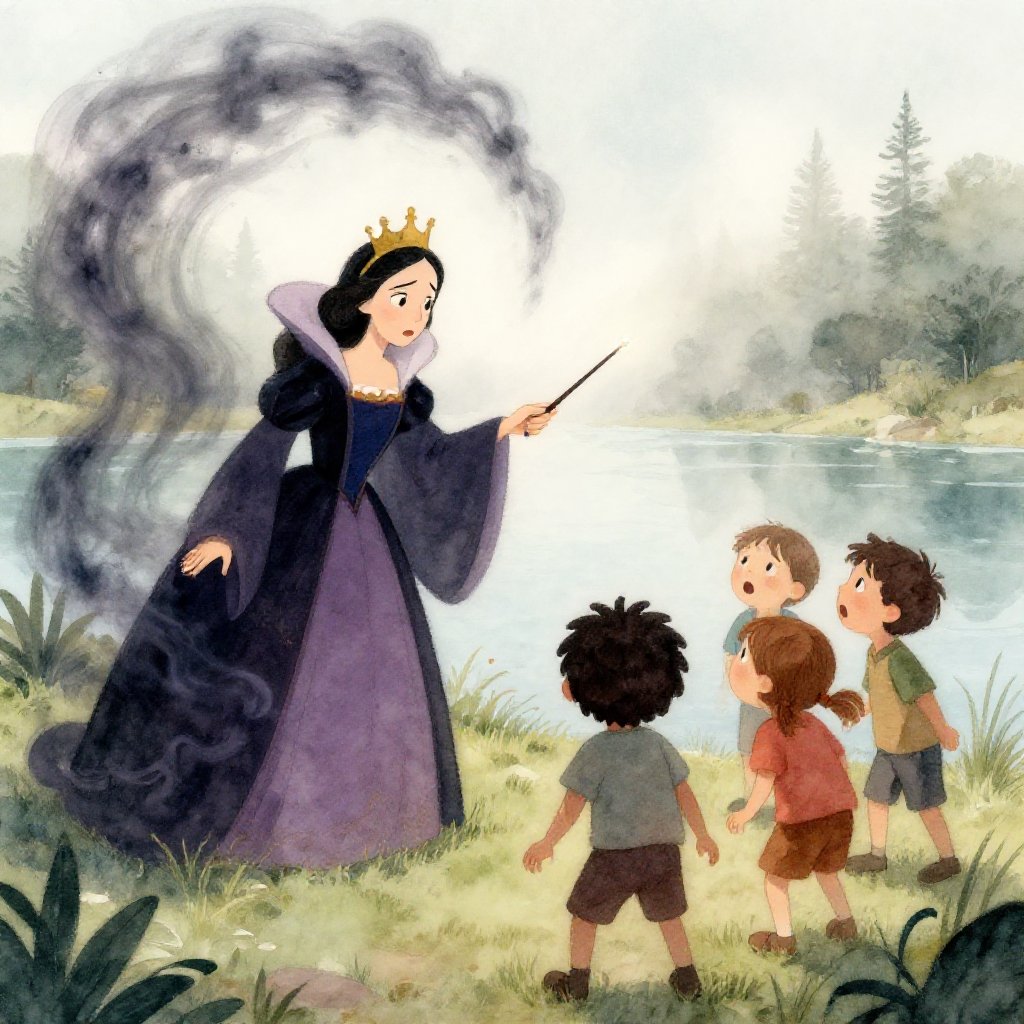
Aoife told the children they were going to visit their grandfather. The children were happy about this, because children want to believe the people who are supposed to keep them safe. They rode with her across the green hills of Westmeath, the twins arguing about something neither of them would remember an hour later, Fionnuala watching the sky.
At the lake Aoife told them to swim. They went in without hesitation. She stood at the shore, took out the druidic rod she had hidden in her cloak, and said the words.
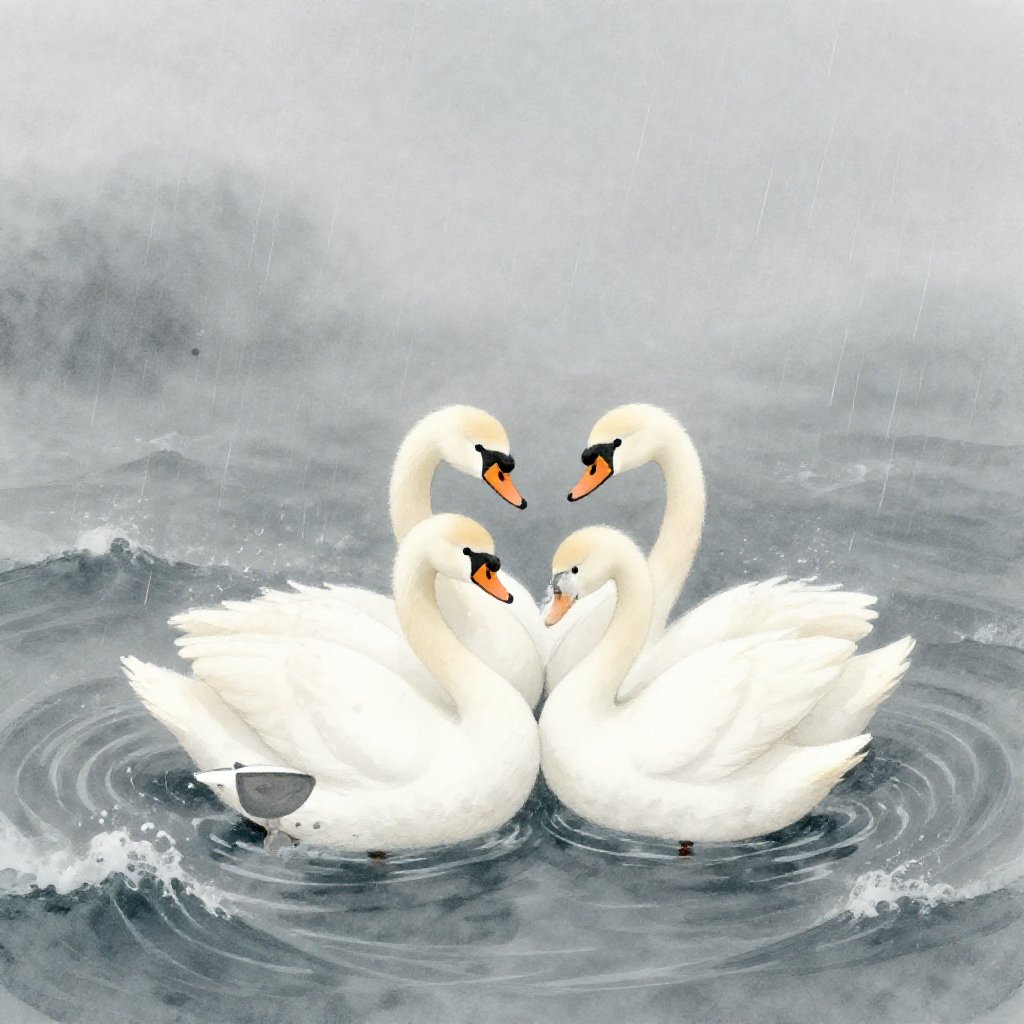
Four swans floated where four children had been. White as the inside of a cloud. And the swans were crying in voices that were still the children's voices, still recognizably Fionnuala, Aodh, Fiachra, Conn.
Here is what cost Aoife everything: she left them their voices and their human minds. She had meant to take more. Something stopped her. They would remember every year of the nine hundred years to come.
She had turned them into swans, but she had left the people inside the swans completely whole.
Their father found them. Of course he found them. He sat at the shore and the swans came to him and the reunion was the saddest kind: full of love and complete impossibility.
He tried to stay. He built a camp at the water's edge. For a while the other gods of Ireland came to visit, sitting on the shore in the evenings while the four swans floated just offshore and Fionnuala sang. She had always been musical. The curse had done nothing to her voice except make it carry over water. People who heard the children of Lir sing forgot about sleep, forgot about sorrow, and simply sat and listened. The feeling it made was not quite sadness and not quite peace. It was something in between those two things that does not have a name.
But time kept moving. Lir could not live at the water's edge forever. The visitors came less often. The camp was gone. The years on Derravaragh were the kindest portion of the curse: they were close to home, in familiar water, with a father who came when he could. Fionnuala learned how to lead her brothers through winter. How to shelter them under her wings in the freeze. How to find food under the ice. She had been fifteen when the curse fell. She would be fifteen for nine hundred years.
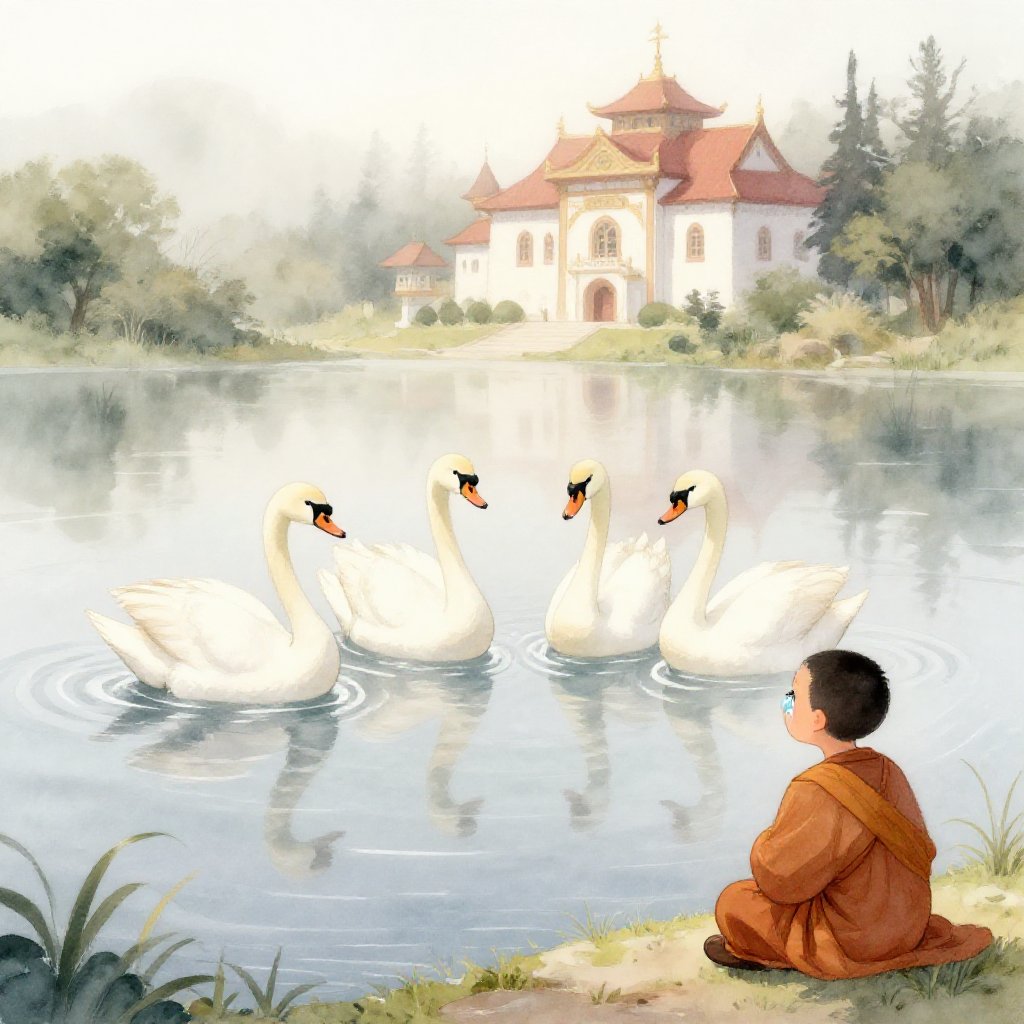
When the three hundred years on Derravaragh ended, the curse moved them. That is what this particular enchantment was: not static. It had its own plan, written before any of them could object.
Three hundred years on the Sea of Moyle, the cold water between Ireland and Scotland. No gentle lake. No father on the shore. No summer evenings with visitors listening to songs. The Sea of Moyle is where the weather comes in sideways and the waves are short and steep and the wind has opinions. Aodh was dashed against rocks in a storm. Fionnuala found him and held him under her wing until he could swim again. The twins were lost in a gale and she called for them until she had no voice left and found them in the morning on a rock on the Scottish side. She held each of them, her head bent over theirs, and talked them back from the edge of something she did not have a name for.
The final three hundred years sent them to the cold Atlantic, off the west coast of Mayo, where the ocean is vast and the horizon has nothing on it and you understand exactly how small you are. Fionnuala sang less from joy now and more from necessity. The songs kept her brothers oriented. The songs kept the human part of all their minds from disappearing into pure endurance. She sang to the open sea in the voice she had been born with.
No one heard. She sang anyway.
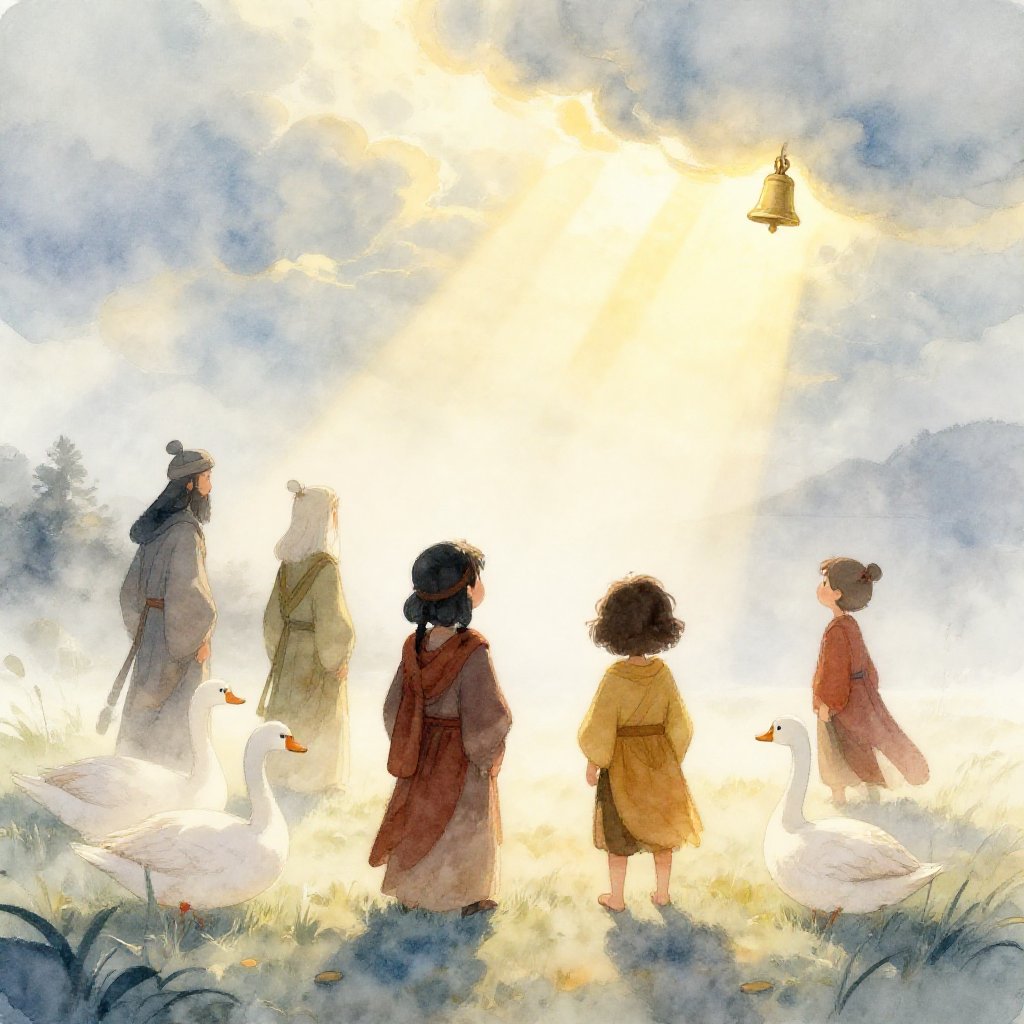
The nine hundred years ended with a sound. A bell.
A monk named Mochaomhog had built a small church on the Isle of Glora off the Mayo coast, because in those days that is what monks did: they went as far into solitude as the land allowed. The bell rang across the water and the four swans heard it. Something shifted inside them that had not shifted in nine hundred years.
Fionnuala had grown up before Christianity came to Ireland. She did not know what a church bell was. She only knew that the sound loosened something in her chest that had been clenched for three centuries, and she led her brothers toward it.
The monk found them at the edge of his island. He fed them and baptized them, and the stories say that when the water touched them the curse fell away. What came out of the lake was not four young people. It was four very old people in young bodies. They had been in the cold and in each other's company for nine centuries. They understood things about endurance and time and the keeping of love through darkness that no sermon could reach. They died soon after. Not from any remaining curse. They were simply ready.
Fionnuala asked Mochaomhog to bury them standing up, together, facing each other, the way they had stood as children in Lir's house before any of this had begun. He did.