← All Stories

The Irish myth of four children cursed to live as swans for 900 years. One of the Three Sorrows of Irish Storytelling, told in full, with real history.

The Children of Lir

Mythwink

The Children of Lir

She turned them into swans. She forgot to take their voices. Nine hundred years later, everyone who heard them wished she had.

1The Wrong Woman

Chapter 1: The Wrong Woman

Lir was one of the Tuatha De Danann, the old gods of Ireland. He was lord of the sea's edge, where the water and the land have their ongoing argument about which of them actually belongs there. He had a hall, and power, and four children who were, by every account, exactly the kind of children you build a hall for.

Their names were Fionnuala, Aodh, Fiachra, and Conn. Fionnuala was the oldest. Aodh was quick and bright. Fiachra and Conn were twins, young enough to still be becoming whatever they were going to be. Their mother had died. Lir had loved her completely, which is the kind of love that makes replacement feel like betrayal, so he waited. He grieved. He did not rush.

Then he remarried.

He chose a woman named Aoife. She was the daughter of Bodb the Red, the king of the gods at that time, and she was, by every account, a reasonable choice. She loved Lir at the start. That part is in the original Irish texts. She was not a villain from the first morning. The old stories are careful about this. They want you to understand how jealousy actually works, which is not like a sword. It's more like rust. It starts as a feeling you recognize and wish you didn't have, and it finds the places where the love isn't quite enough, and it moves in there slowly.

The love in Lir's house was not quite enough for her. There were four children in it already, and the portion of Lir that belonged to Fionnuala, Aodh, Fiachra, and Conn was not a portion that shrank when Aoife arrived. It was fixed. It had been there since before she existed. And she could feel it every day, the exact size and shape of the thing she could not have. Day by day. Year by year.

This is how it ends: badly, and entirely predictably, and with nine hundred years of consequences for people who had done nothing at all.

2Lake Derravaragh

Chapter 2: Lake Derravaragh

Aoife told the children they were going to visit their grandfather.

She took a druidic rod with her, hidden in her cloak. She had decided to kill them. She had been thinking about it for a long time and she had decided. She had the rod and the knowledge and the will.

Then she looked at them on the road. Four children. Riding beside her through the green hills of County Westmeath, the twins arguing about something that would not matter in an hour, Aodh pointing at birds, Fionnuala watching the sky with the expression of someone who is already, at fifteen, more patient than most adults. And Aoife could not do it. She lost the nerve for murder. This would turn out to be the single worst mercy she ever showed anyone.

At the lake, she told them to swim. They went in without hesitation, because children believe the people who are supposed to keep them safe. They went in laughing.

She stood at the shore with the rod and said the words.

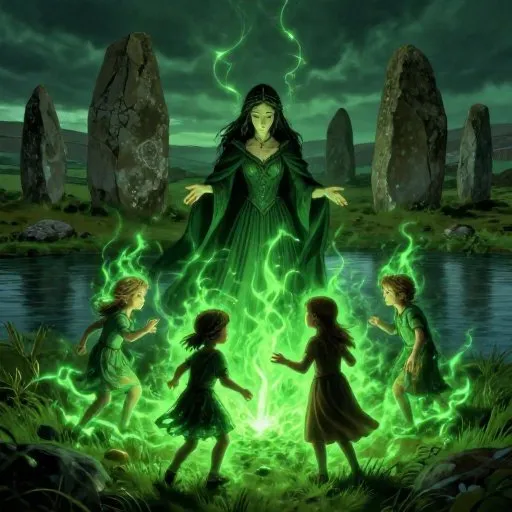
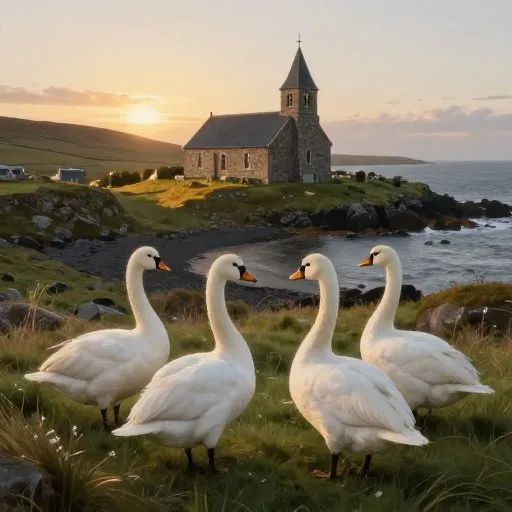
Four swans floated where four children had been. White as the inside of a cloud. Already crying in voices that were still the children's voices, recognizably each of them, Fionnuala's voice and Aodh's and Fiachra's and Conn's, coming out of the throats of birds.

Here is what Aoife had left them. She had left them their voices. She had left them their minds. Their memory. Their language. Their love for their father and for each other. The full interior life of four children, sealed inside four swans, completely intact.

She had meant to take more. Something stopped her twice: first from killing them, then from taking everything else. The curse ran nine hundred years. She left them perfectly conscious for every day of it.

That was the cruelest thing she did, and she didn't do it on purpose.

3The First Three Hundred Years

Chapter 3: The First Three Hundred Years

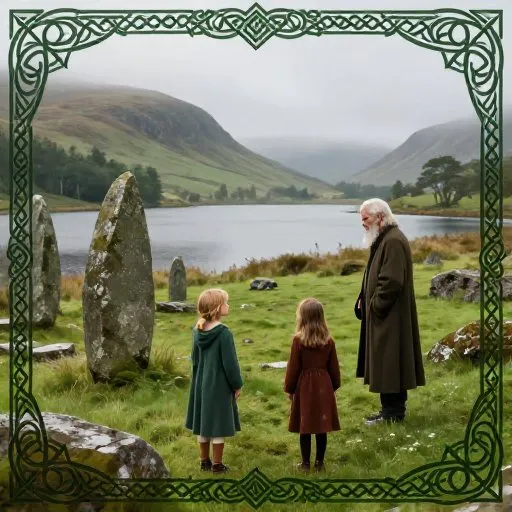
Lir found them. Of course he found them. He sat at the shore of Lake Derravaragh and the four swans came to him across the water and the reunion was the particular kind that is full of love and complete impossibility in equal measure.

He could not change it. He had power, but not this kind. The druidic enchantment was fixed. The only thing he could do was stay, so he built a camp at the water's edge and he stayed.

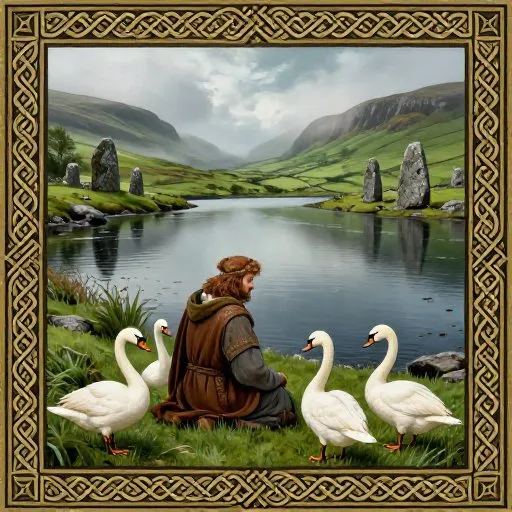
And this is the part the Irish storytellers always pause on. For a while, the other gods came. They sat on the shore in the evenings while the four swans floated just offshore, and Fionnuala sang. She had always been musical, apparently. The curse had done nothing to her voice except give it water to carry over.

Think about what that means. Four children who could not be children anymore. Who lived in the cold and ate fish and slept on the water. Whose father built a camp at a lakeside and could only listen. And the oldest of them used the voice she hadn't lost to sing, and the sound it made was not quite sadness and not quite peace, but something in between that does not have a name in any language, and the gods of Ireland came from all over to sit on a lakeshore and hear it.

That is what Aoife gave them when she failed to take their voices. She gave them that.

But time kept moving. Lir could not live at the water's edge forever. The visitors came less often. Then not at all. Fionnuala learned how to lead her brothers through winter. How to shelter them under her wings during the freeze. How to find food under the ice. She had been fifteen when Aoife stood at the shore with the rod. She would be fifteen for nine hundred years.

4The Cold Seas

Chapter 4: The Cold Seas

The curse was not static. This is the detail that makes it different from a simple enchantment. Aoife had written an itinerary into it. Three hundred years on Lake Derravaragh. Three hundred years on the Sea of Moyle. Three hundred years on the Atlantic off the west coast of Mayo. The children had no say in any of it. When the three hundred years on the lake ended, the curse simply moved them.

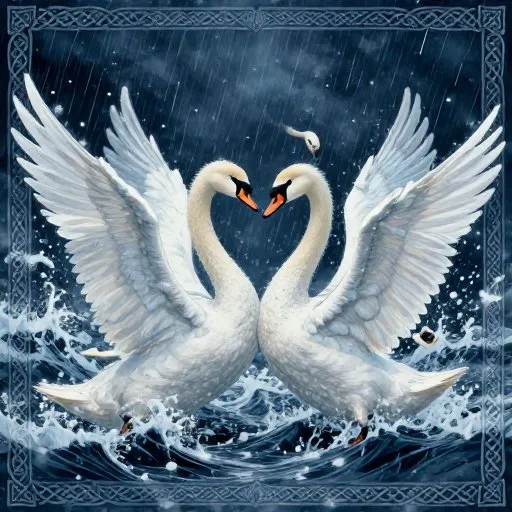
The Sea of Moyle is the water between northeastern Ireland and Scotland. It is not a lake with a father on the shore. It is open sea where the weather comes in sideways and the waves are steep and short and the wind has strong opinions about everyone passing through. Aodh was dashed against rocks in a storm. Fionnuala found him and held him under her wing until he could swim again. In a gale she lost the twins entirely. She called for them until she had no voice left and found them in the morning on a rock on the Scottish coast, barely there. She held them, one at a time, her head bent over theirs.

Three hundred years of that.

Then the Atlantic off Mayo. The western ocean. The kind of horizon that has nothing on it and means it. Out there, Fionnuala sang less from joy and more from necessity. The songs kept her brothers oriented. The songs kept the human part of all four of them from disappearing into pure endurance. She sang to open water in the voice she had been born with.

No one heard. She sang anyway.

Nine hundred years is almost impossible to hold in your head as a number. For context: the entirety of the Roman Empire, from the founding of the city to the fall of the Western Empire, lasted about 1,200 years. The children of Lir were swans for three-quarters of that. In cold water. Conscious. Missing their father.

5The Bell

Chapter 5: The Bell

The nine hundred years ended with a sound.

A monk named Mochaomhog had built a small church on the Isle of Glora off the Mayo coast. In those days, that is what Christian monks did with their solitude: they went as far into it as the land allowed, found a rock in the sea, built a cell, and rang a bell in the mornings. The bell rang across the water.

Fionnuala had been born centuries before Christianity came to Ireland. She did not know what a church bell was. She only knew that the sound did something to the thing in her chest that had been clenched since Lake Derravaragh, and she led her brothers toward it through the morning mist.

Mochaomhog found them at the edge of his island. He fed them and baptized them, and the water, the stories say, released the enchantment. What came out of the water onto that small island was not four young people. It was four ancient people in bodies that had stopped aging at fifteen and seventeen. They had been in the cold and in each other's company for nine centuries. They had endured things that no sermon could reach and no language had words for. They were ready to stop.

They died soon after. Not from any remaining curse. The monk buried them together, standing upright, facing each other, the way Fionnuala had asked. Facing each other the way they had stood in their father's house in Westmeath before any of this had begun.

The medieval Irish scribes who wrote this down were monks themselves, and they gave it a Christian ending, a baptism and a release and a peaceful death. Whether that was the original ending or something they added is a question scholars have been arguing about for centuries. The older pagan versions of the story may have ended differently.

But there is something that doesn't change between versions: the image of Fionnuala on the open Atlantic in the dark, singing to keep her brothers human, and no one hearing, and her singing anyway. That part is in every version. The Irish kept it in every telling across every century.

Some things you do not take out of a story because they are too true to remove.
Mythology Notes