Mythwink
Maui Snares the Sun
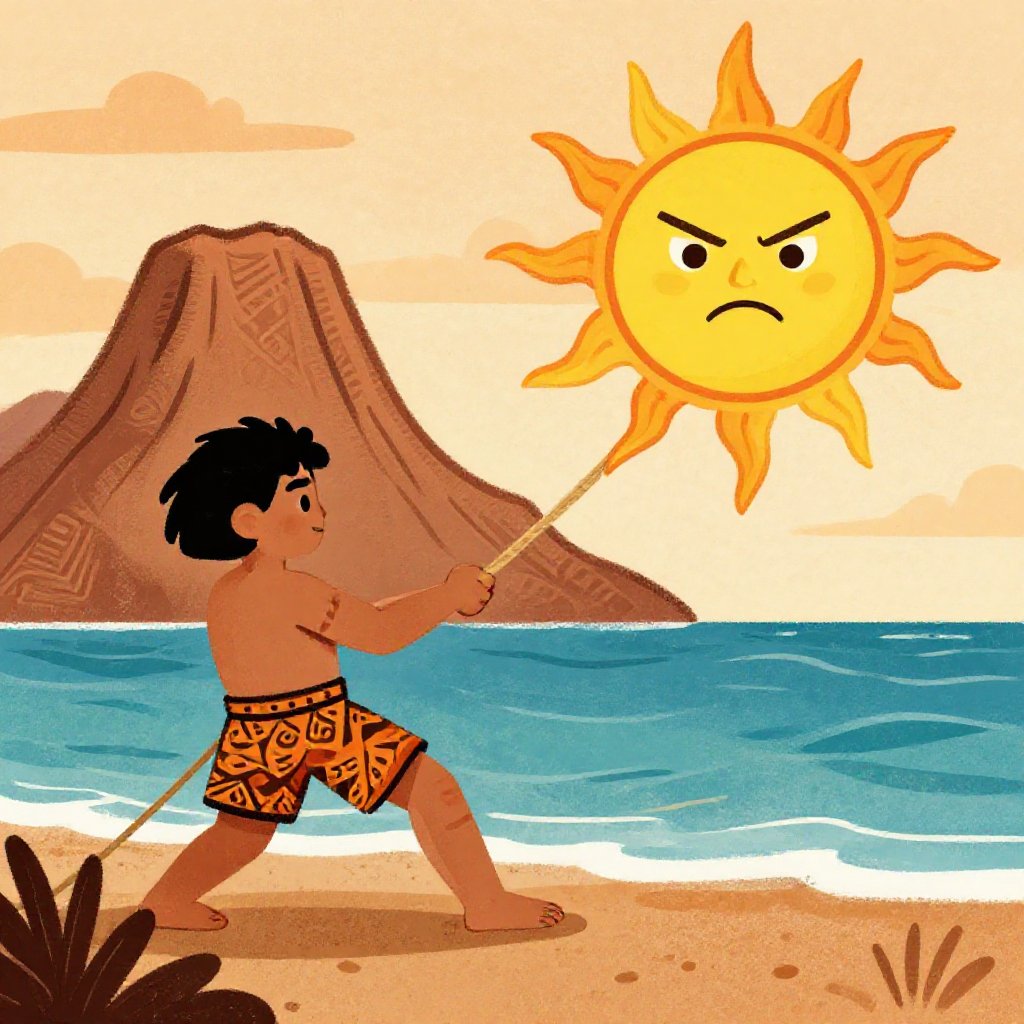
The sun crossed the sky too fast and nobody could get anything done. Maui had a rope and a bad attitude about that.
Polynesian Mythology
Mythwink
The sun crossed the sky too fast and nobody could get anything done. Maui had a rope and a bad attitude about that.
Polynesian Mythology
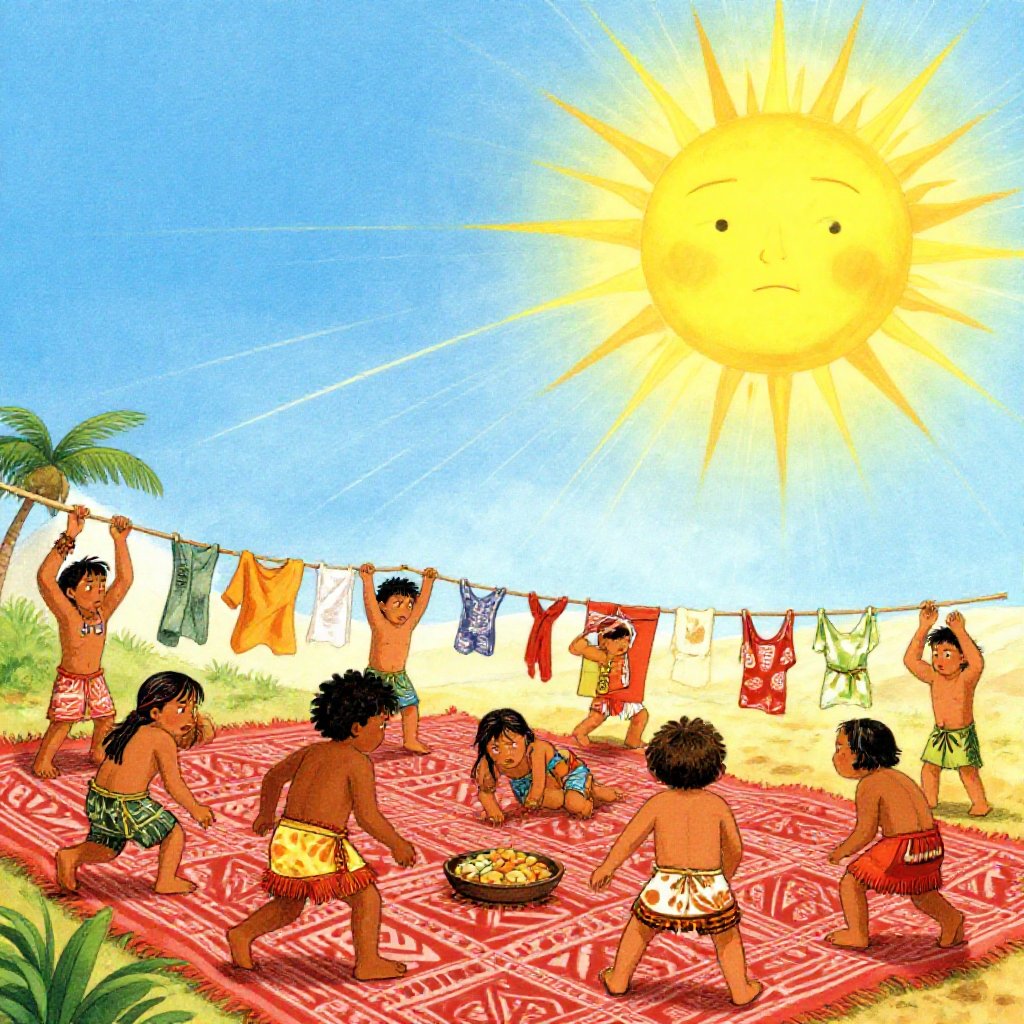
The sun did not care.
He had a path across the sky, he had been running it since the world began, and he ran it fast because he had always run it fast and because nobody had ever told him not to. Up in the east before you finished yawning, gone in the west before you had gotten anything done. Fishermen pulled up half-dry nets. Farmers worked in half-lit fields. Tapa cloth spread out to dry in the morning was still damp when the afternoon left.
Maui noticed things that other people had stopped noticing. That was his particular kind of trouble. He was not the biggest of his brothers, not the oldest, not the first one people called on when something needed to be strong or steady. But he watched the world the way someone watches a situation they have decided to fix. He watched the sun sprint across the sky every single day and thought: that can be changed.
His mother Hina was the one who mentioned the tapa cloth. She had been trying to dry a length of it for days. Every morning she spread it on the rocks. Every afternoon the sun was gone before it was finished. She said it without expecting anything to happen.
Maui was listening. He went to find rope.
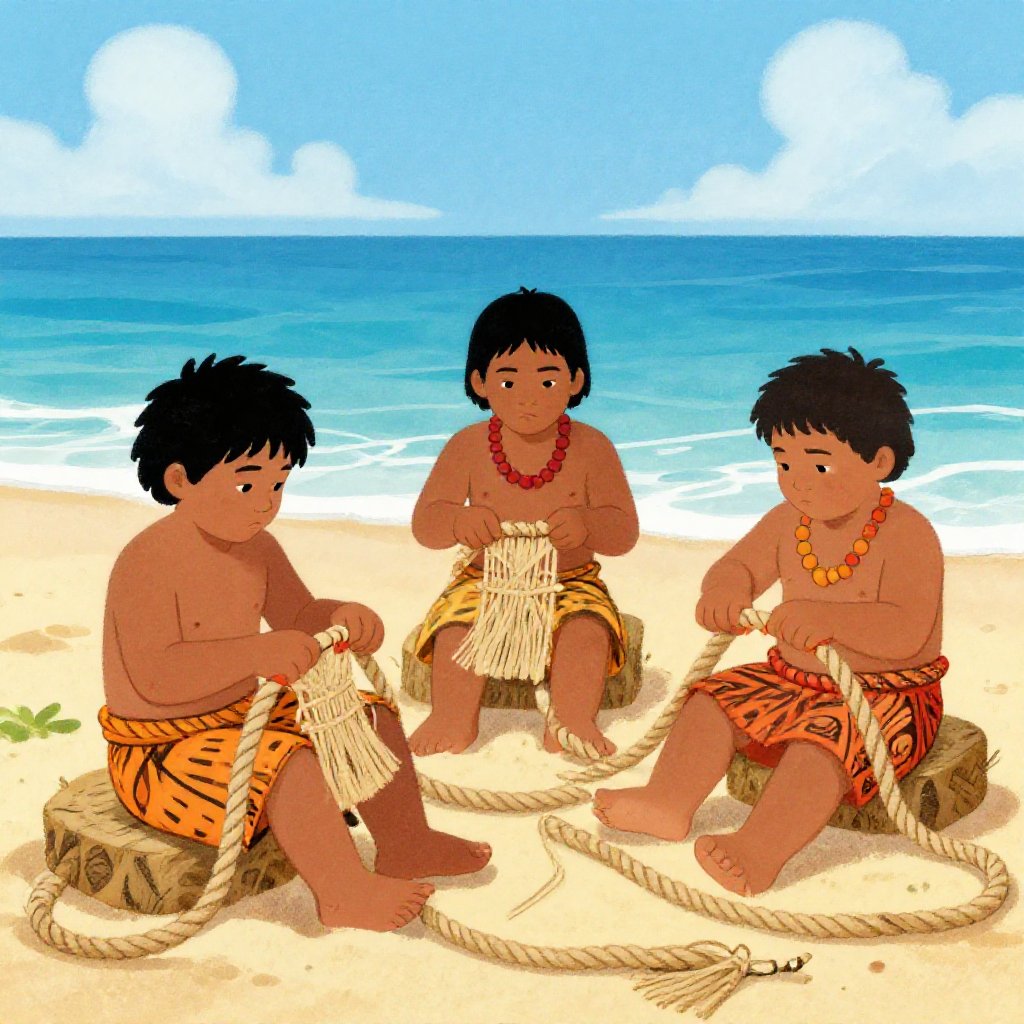
Not just any rope.
Maui cut the hair from his own head and braided it with twisted flax and whatever else was strong enough not to embarrass him. He worked through several nights. His brothers came by to ask what he was doing and he told them: catching the sun. They nodded the way people nod when they have decided not to engage with something.
He went to find his grandmother, who lived near the place where the sun came up. That part of the world was not comfortable. The light came sideways before dawn and the ground remembered heat even in the middle of the night. His grandmother was there, cooking bananas, not particularly impressed by his arrival. Maui explained the plan. She handed him a jawbone, which in her tradition was both a weapon and something full of power, and told him not to come back to complain about what happened. She had seen him do worse things and come out fine.
He braided sixteen ropes and laid them in loops across the path where the sun's great legs would have to step through at dawn. He put his brothers behind him, which they did not love. He held the jawbone. He waited in the particular way of someone who has made up their mind completely: very still on the outside.
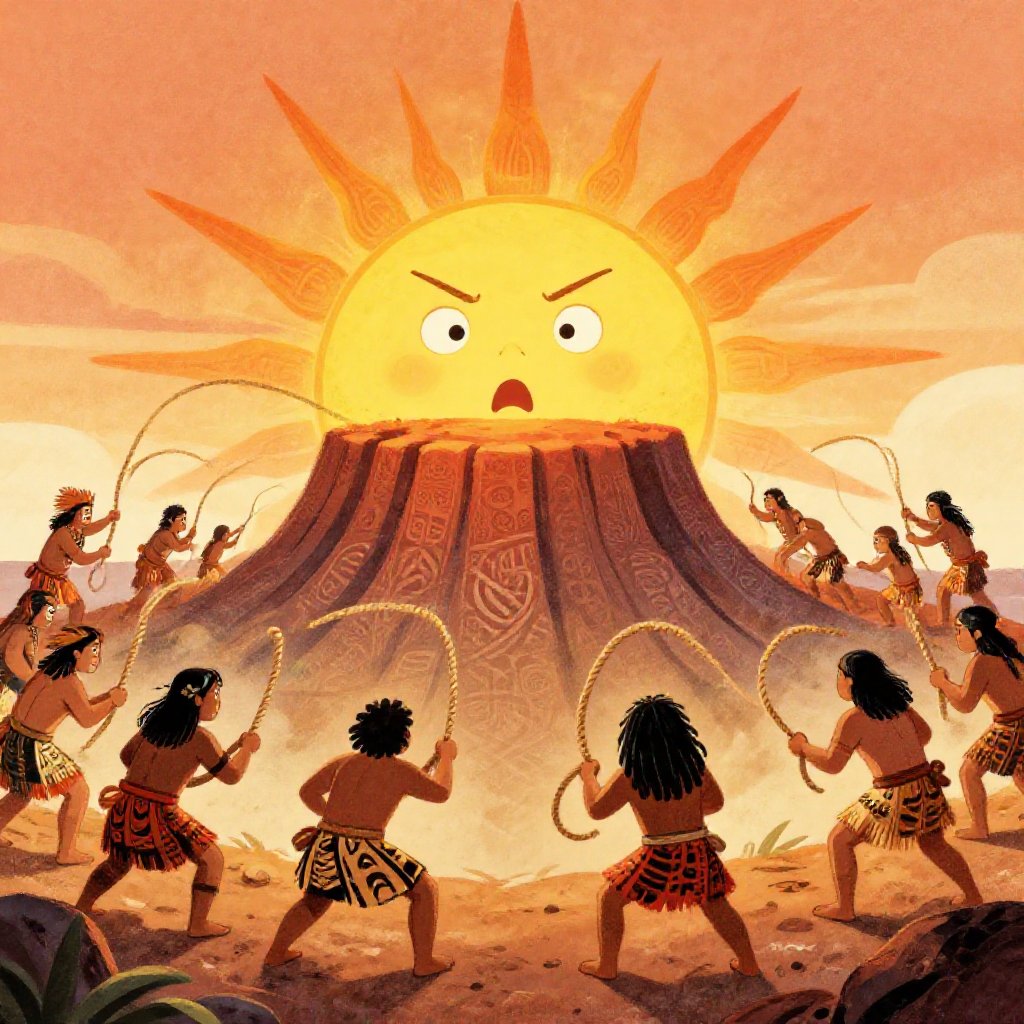
The sun came up the way it always did. Fast, hot, entirely confident. The first ray came over the rim of the crater and Maui threw his loop.
It caught.
He threw another. It caught. His brothers threw their ropes, and eight more of the sun's legs were tangled before the sun fully understood what was happening. The sun took a few seconds to register that it had been stopped. That was a few seconds the sun had never experienced before.
Then the roaring started.
The sun pulled. The ropes burned. Maui's brothers dug in their heels. The mountain shook. The eastern sky went white with heat. The sun had never been spoken to this way and expressed this very clearly and at length. Maui planted his feet and held on and shouted back. This was not a diplomatic strategy. It was his strategy.
He hit the sun with the jawbone. He hit it again. The sun, which had planned to simply burn through the ropes and keep going, reconsidered. The man on the other end of these ropes was not letting go. He was hitting. He did not appear to be stopping. The ropes were, against all reason, holding. The sun had never negotiated before. It was about to learn.
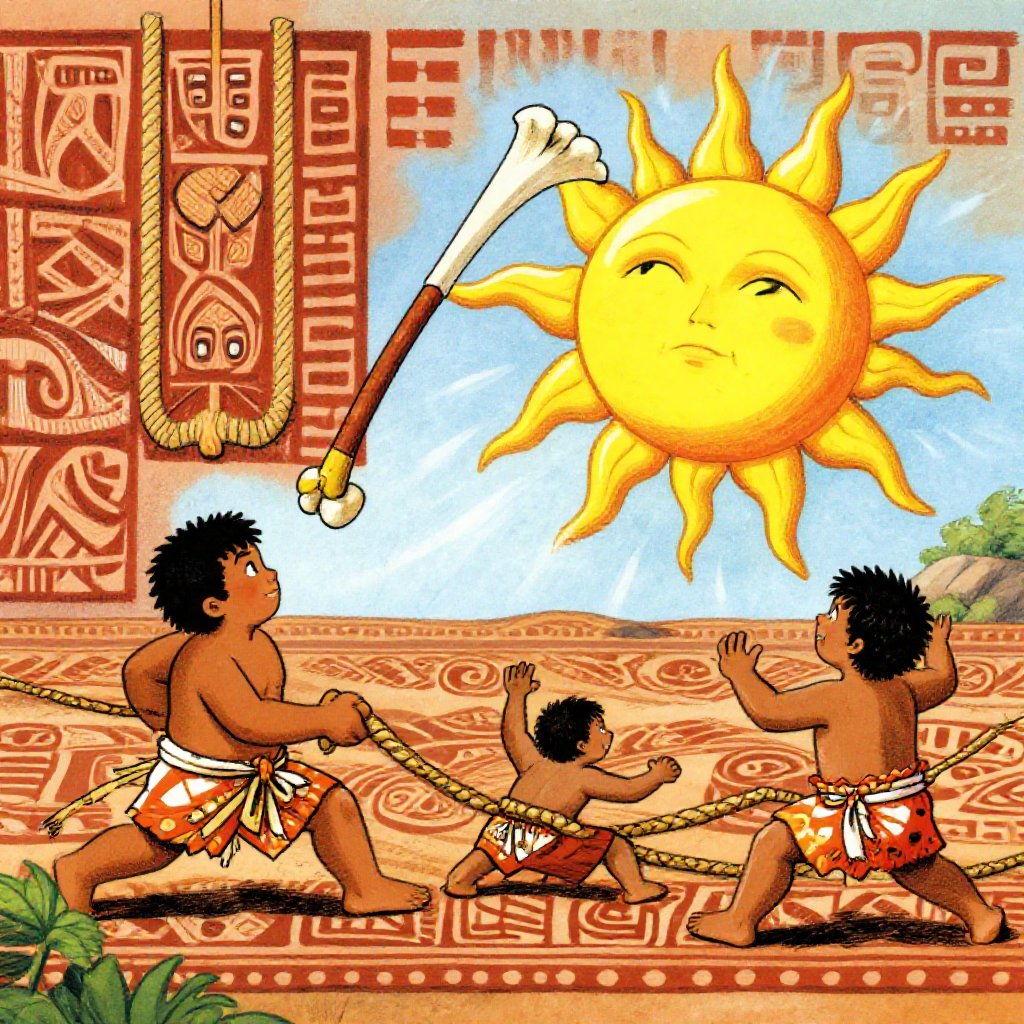
Maui told the sun what was going to happen.
More time. A slower crossing. Long enough for crops to grow and cloth to dry and people to fish and cook and raise children in something better than a sprint between dark and dark. The sun argued. The sun had a schedule. The sun had been doing this since before there were people to file complaints. Maui hit it again with the jawbone.
The agreement took shape the way agreements usually do between someone who is free and someone who is tied up: one side becomes more interested in stopping the pain than in winning. The sun would slow down. Half the year it would walk. The rest of the year it could run. That is why some seasons are long and warm and generous, and some are short and cold and quick. The sun was not happy about the arrangement. It agreed anyway.
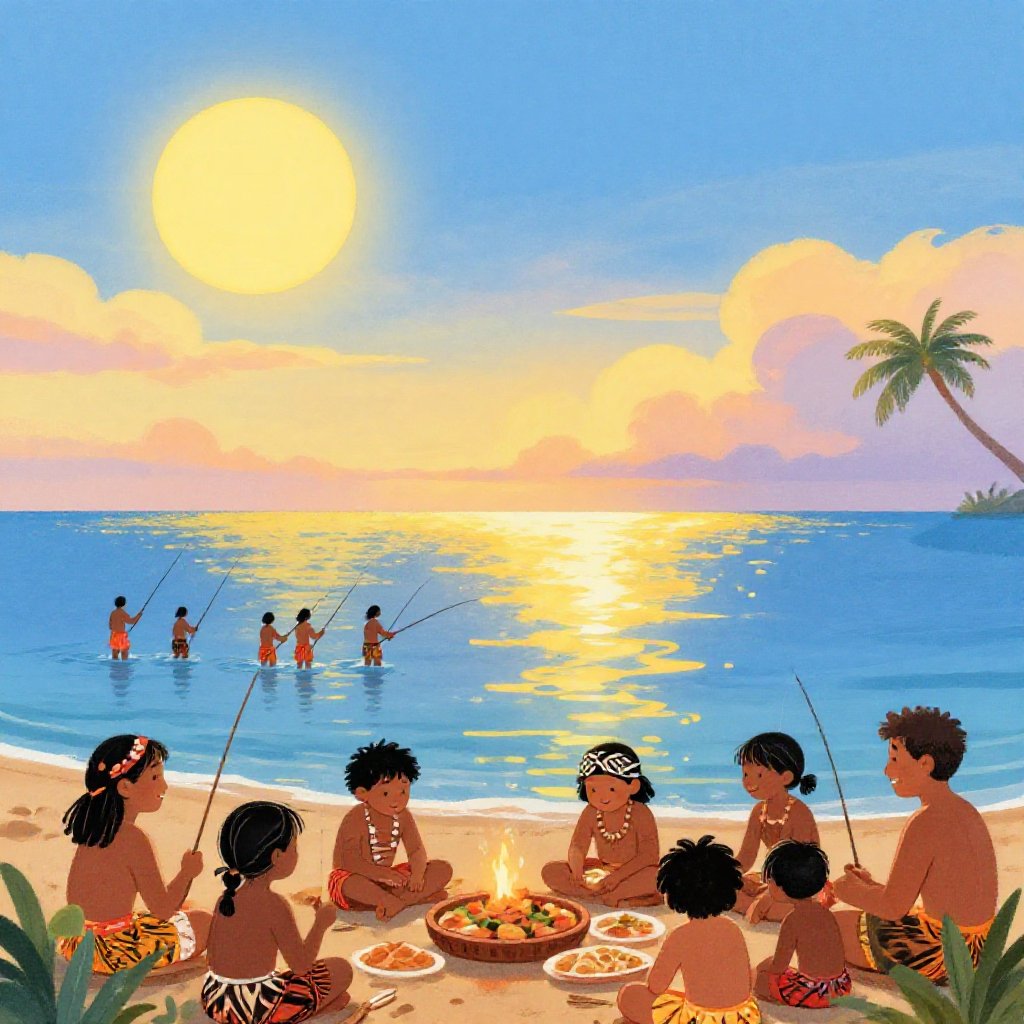
Maui released the ropes. The sun moved on across the sky. Slower than it had ever moved before. His brothers stood on the mountain catching their breath, watching the light move in a way they had never seen it move: like it had somewhere to be, but no particular rush about getting there.
His mother's tapa cloth dried completely by midday.
People tell the other Maui stories after this one.
The fishing up of islands from the sea floor. The attempt to bring immortality to all people, which did not work out the way he hoped. The fire-stealing. The monsters and the arguments. Maui had a very full life, once there was enough day to fit it in.
But this is the story people come back to. Not because it is the biggest or the saddest. Because it is the most human. He saw something wrong. Not wrong in a sky-falling, gods-at-war sense. Just: the day is too short. People cannot get things done. His mother is standing over a piece of cloth she cannot dry. That is the whole problem.
So he made rope. He got up early. He put his brothers to work. He hit the problem until it changed its behavior.
There is a long tradition in Polynesian culture of Maui as the one who improves the world for ordinary people. Not for gods or chiefs. For fishermen and farmers and mothers drying cloth. The sun story is usually the first one children learn, and it is easy to understand why. It says: when something is wrong, you do not wait for someone else to fix it. You make rope. You climb the mountain. You hold on.